

If you’ve searched “best pet hair remover” more than once this month, you already know the real problem. It’s not finding a product — shelves are full of them. It’s finding one that still works after week two, when the roller’s out of sheets, the vacuum attachment’s clogged with fur, or the brush is just pushing hair from one side of the sofa to the other instead of actually lifting it off.
Anyone with a cat or dog has been through this cycle. You get excited about a new gadget, it does a great job the first couple of times, then it quietly stops pulling its weight and you’re back to picking hair off your jumper by hand before you leave the house. So instead of ranking products by star ratings, it’s worth looking at why most pet hair removers fail — and which types genuinely hold up.
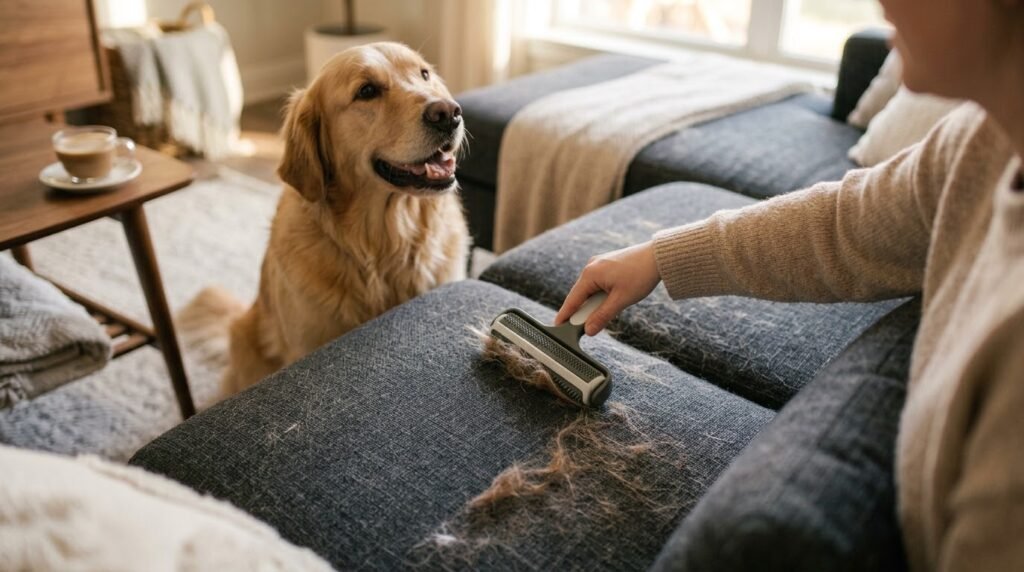
Why most pet hair tools stop working so fast
Pet hair isn’t like dust or crumbs. It’s got a slight static charge, it’s fine enough to work its way into fabric fibres, and it clings to anything with texture — jumpers, car seats, carpet, the inside of your sock drawer somehow. Tools that rely on stickiness (like basic lint rollers) get overwhelmed fast because the adhesive fills up after a few passes. Tools that rely on suction alone often can’t grab hair that’s already tangled into fabric weave. That’s why a lot of people end up owning three different hair removers and still not solving the problem — none of them are actually built for how pet hair behaves.Pin
The tools that hold up long-term tend to do one of two things well: they either use static or friction to properly lift hair off surfaces without needing constant refills, or they get ahead of the problem by removing loose fur from your pet before it ever hits the sofa.
Tools that work on surfaces (sofas, clothes, car seats)
Rubber and electrostatic gloves. These have become one of the more reliable options because they don’t rely on adhesive at all. You run your hand over the fabric and the friction builds a static charge that pulls hair up into a clump instead of pushing it deeper into the weave. Our Electrostatic Pet Hair Removal Glove works this way — no batteries, no refills, and it holds up on sofas, car interiors, and clothing without leaving that sticky residue rollers tend to leave behind.
Rubber squeegees. Good on carpet and upholstery specifically, less useful on clothes. Worth having as a backup, not as your only tool.
Vacuum attachments. Useful for a deep clean once a week, but not something you’re going to reach for daily, and they struggle with hair that’s already worked into fabric.
We actually broke this down in more detail in Pet Hair Removal Glove vs Brush, if you want the side-by-side.
Best Pet Hair Remover Tools
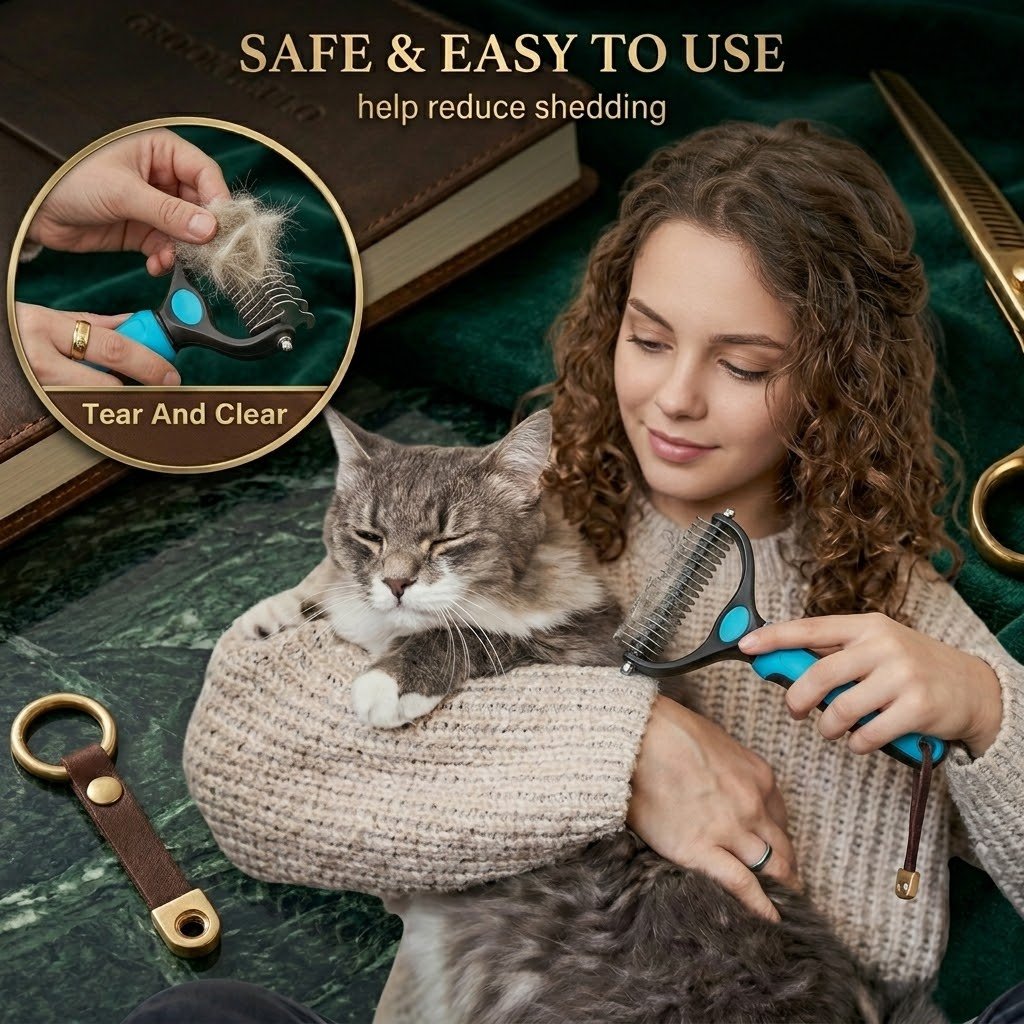
This is the part most people skip, and it’s honestly the bigger lever. If your pet is shedding heavily, no surface tool is going to keep up — you’re just managing the mess after it’s already happened. A proper grooming brush used two to three times a week catches loose undercoat before it ends up airborne or on your furniture in the first place.
Our Stainless Steel Pet Hair Removal Brush is built for this — the fine stainless bristles pull out loose, dead fur without irritating the skin, which matters most during spring and autumn shedding seasons when both cats and dogs blow their coat. Owners who add this into a regular routine tend to notice the difference in their homes within a week or two, not just on their pet.
So what’s actually the best pet hair remover?
Honestly, it depends on what you’re trying to fix:
- Clothes, car seats, sofas, last-minute pickups → an electrostatic glove is the most reliable option because it doesn’t run out of stickiness and works on almost any fabric.
- Ongoing shedding, especially with double-coated breeds → a stainless steel grooming brush used consistently will cut down the amount of loose hair in your home overall.
- Deep clean once a week → keep a vacuum with a pet hair attachment as backup, not your primary tool.
Most households end up needing both a surface tool and a grooming tool — one deals with what’s already loose, the other stops so much hair from getting loose in the first place. Trying to solve shedding with only a lint roller is a bit like mopping a floor while the tap’s still running.
A few small habits that make any tool work better
- Brush during shedding season even if your pet “doesn’t seem that bad” — undercoat builds up under the topcoat where you can’t always see it.
- Damp hands or a damp glove lift hair more effectively than dry ones on fabric.
- Wash pet bedding weekly; it’s usually the biggest hidden source of hair redistribution around the house.
- A short, high-quality brushing session beats a long, half-hearted one — most pets tolerate two minutes of proper brushing better than ten minutes of being chased around with a glove.
At the end of the day, the best pet hair remover isn’t one single product — it’s having the right tool for the right job, used consistently. Get the shedding under control at the source with regular brushing, then keep a good glove on hand for the daily cleanup, and you’ll spend a lot less time picking fur off your clothes on the way out the door.
Best Pet Hair Remover 👉 Shop Now at Mewvora.com