

Pet Hair Removal Glove vs Brush
Scroll through any pet grooming category and you’ll see both sitting side by side, both promising the same thing: less fur on your sofa, less fur on your clothes, a calmer shedding season. They look like they do the same job, so it’s a fair question — do you actually need one, or the other, or both? The honest answer depends on your pet’s coat, not on which product has the better photos.
How Each One Actually Works
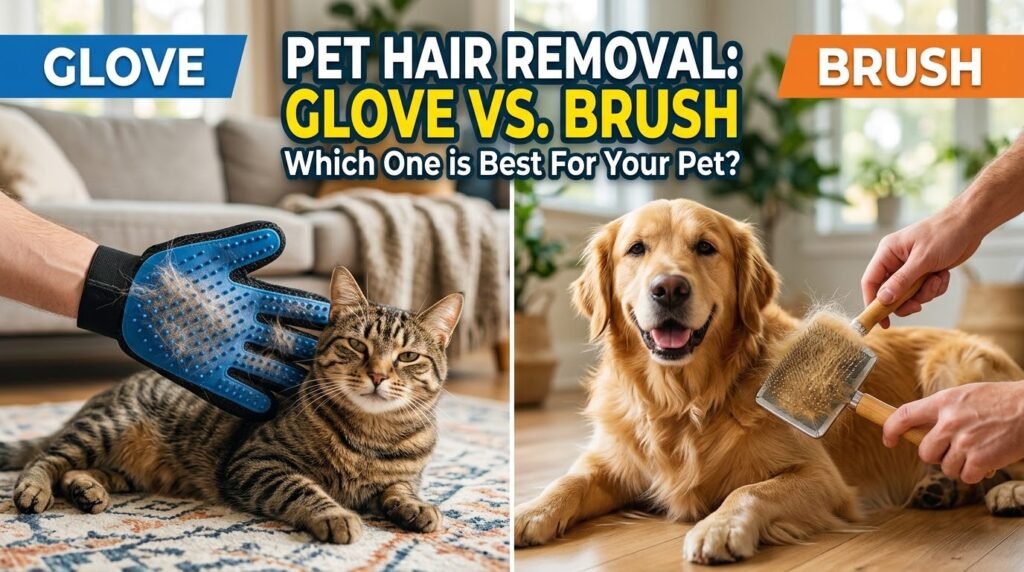
A grooming glove is worn over your hand, with small rubber or silicone nubs across the palm and fingers. Because it moves the way your hand naturally moves when you pet an animal, it doesn’t feel like grooming to most cats and dogs — it feels like affection with a bit of extra texture. That makes it especially useful for animals who tense up or bolt at the sight of an actual brush.
A stainless steel brush works differently. The metal bristles are stiff enough to get down through a topcoat and pull loose fur out of the denser undercoat underneath — something a glove’s soft nubs generally can’t do. It requires a more deliberate back-and-forth motion rather than a petting motion, which is exactly why it’s more effective on heavy shedders, but also why some pets need a slower introduction to it.Pin
Which Coat Type Actually Needs Which Tool
This is really the deciding factor, more than personal preference:
- Short-haired cats and dogs usually do fine with a glove alone. There’s less undercoat to deal with, so surface-level fur removal covers most of the job.
- Double-coated or long-haired breeds — think huskies, retrievers, or fluffier cats — build up a dense undercoat that a glove will barely touch during shedding season. A brush is doing real work here that a glove physically can’t replicate.
- Mid-length coats often benefit from both: a glove for regular light maintenance, a brush during the heavier shedding weeks.
If you only own one type of pet and know their coat, this alone tells you which tool to buy first.
Which One Handles Anxious or Older Pets Better
For a pet that’s never been brushed, or one that’s grown nervous about grooming after a bad experience, a glove is almost always the gentler starting point. It reads as touch rather than a tool, which matters a lot for trust-building. Once a pet is relaxed with that, introducing a brush for the deeper work tends to go far more smoothly than starting with the brush cold.
Older or arthritic pets also tend to tolerate gloves better simply because the motion is softer and there’s no risk of catching stiff or thinning fur the way a firmer brush stroke sometimes can.
Our Honest Take: You Probably Want Both, Just Not at the Same Time
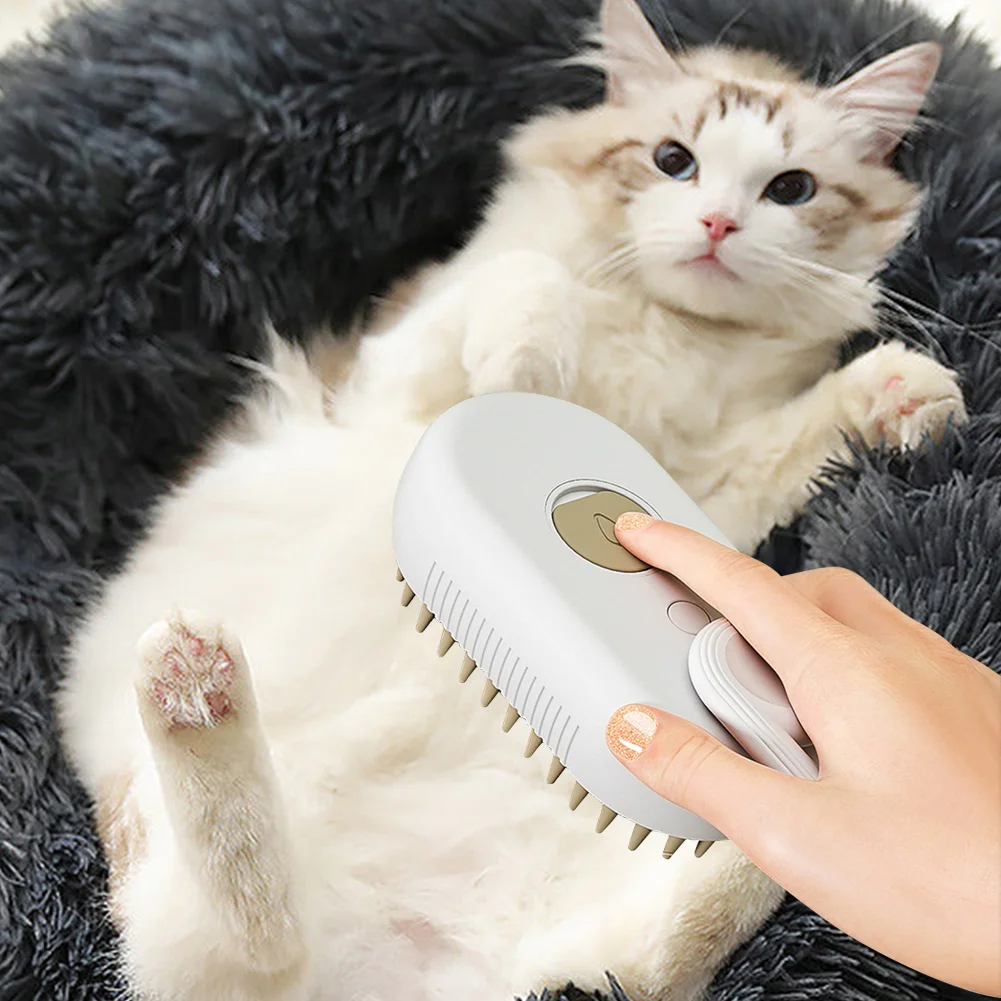
Rather than pick a winner, it’s more accurate to say these two tools solve different problems. Our Electrostatic Pet Hair Removal Glove (£21.99) is the one we’d suggest for daily light maintenance, bonding time, or introducing a nervous pet to grooming for the first time. Our Stainless Steel Pet Hair Removal Brush (£24.99–£29.99) is the one that earns its keep during actual shedding season, when a glove alone won’t keep up with what’s coming out of the undercoat.
If you can only buy one right now, match it to the coat in front of you: glove for short hair or a first-time nervous groomer, brush for anything double-coated or heavily shedding. If your household has more than one pet or coat type, the two genuinely complement each other rather than compete.
FAQ
Do I really need both, or is that just upselling? Not upselling — they solve different problems. A glove removes loose surface fur gently; a brush reaches undercoat a glove can’t touch. Owners of double-coated breeds especially notice the difference once they’ve used both.
Which one is better specifically for cats? Most cats tolerate the glove better initially since it mimics petting, but longhaired cats still need a brush during heavier shedding periods — the glove alone won’t manage a build-up of undercoat.
How often should each be used? A glove can be used most days with no downside, since it’s gentle enough for frequent use. A brush is better suited to a few sessions a week, more often during peak shedding season, since it’s doing more intensive work on the coat.

Shop the Comparison
Both tools above are priced in GBP and ship direct from our UK store — no currency conversion guesswork, wherever you’re ordering from.