

A cat can spend more of its life asleep than awake — here’s the actual explanation behind why do cats sleep so much, and what’s really happening during all those hours.
The average cat sleeps somewhere between 12 and 16 hours a day, with kittens and older cats often pushing closer to 18 or even 20. Why do cats sleep so much comes down to a mix of evolutionary leftovers, the way feline sleep actually works, and a few age-related factors — and it’s a lot more interesting than “cats are just lazy.”
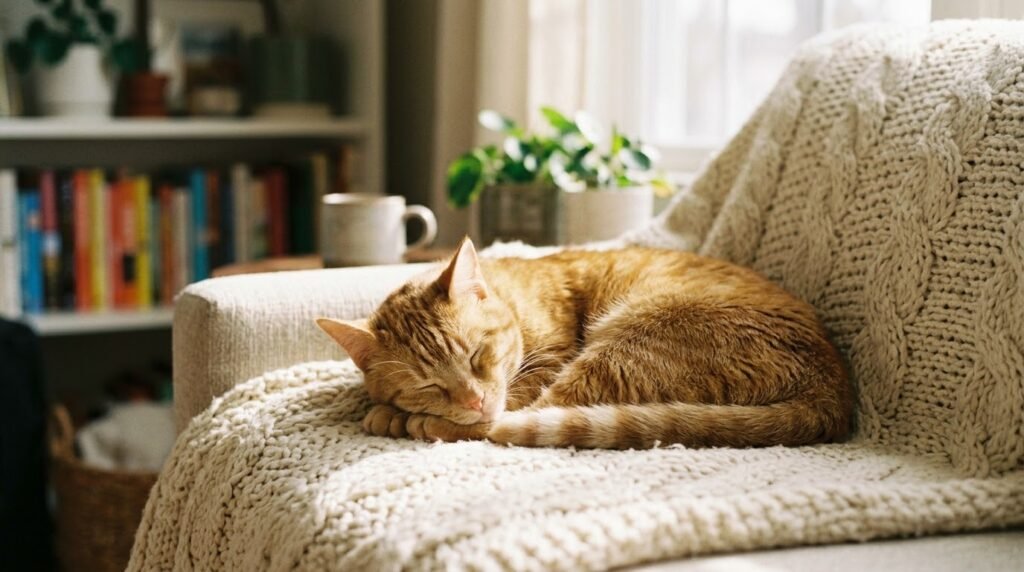
Why Do Cats Sleep So Much? The Evolutionary Answer
The short answer traces back to their wild ancestors. Cats are natural predators built for short, intense bursts of energy — stalking, sprinting, pouncing — rather than sustained activity like a dog bred to run or work all day. In the wild, that kind of high-intensity hunting is exhausting, and conserving energy between hunts was essential for survival. Domestic cats don’t need to hunt for food anymore, but the instinct to conserve energy through extensive rest never disappeared, which is a big part of why do cats sleep so much even with a full food bowl waiting for them.Pin
Why Do Cats Sleep So Much (But Wake Up So Easily)?
Here’s something that surprises a lot of owners: most of a cat’s sleeping hours aren’t actually deep sleep. A large portion is what’s often called “catnapping” — a light doze where a cat’s senses stay partly alert, ready to react instantly to a sound or movement. You’ve probably seen this yourself: a cat that looks completely out for the count suddenly bolting upright the second a treat bag rustles. That light-sleep state is itself a leftover survival trait, keeping them ready to respond to danger even while resting.
Do Cats Dream? What Happens During Deep Sleep
Cats do experience proper deep sleep, including REM sleep, usually in shorter stretches within their overall sleep time. During REM, you’ll often see whisker twitches, paw movements, or the occasional muffled sound — signs strongly associated with dreaming in other mammals, cats included. What they’re actually dreaming about isn’t something science can confirm, but the physical signs of active brain activity during this stage are well documented.
Why Do Cats Sleep So Much More At Certain Ages?
Age plays a real role in why do cats sleep so much at different life stages. Kittens sleep the most of all, often 18-20 hours a day, since a huge amount of physical and neurological development happens during sleep in early life. Senior cats tend to sleep more again too, generally due to lower overall energy levels and, in some cases, age-related joint stiffness that makes staying active less comfortable. Healthy adult cats in their prime years typically sit at the lower end of the range.
Making Sure That Sleep Is Actually Restful
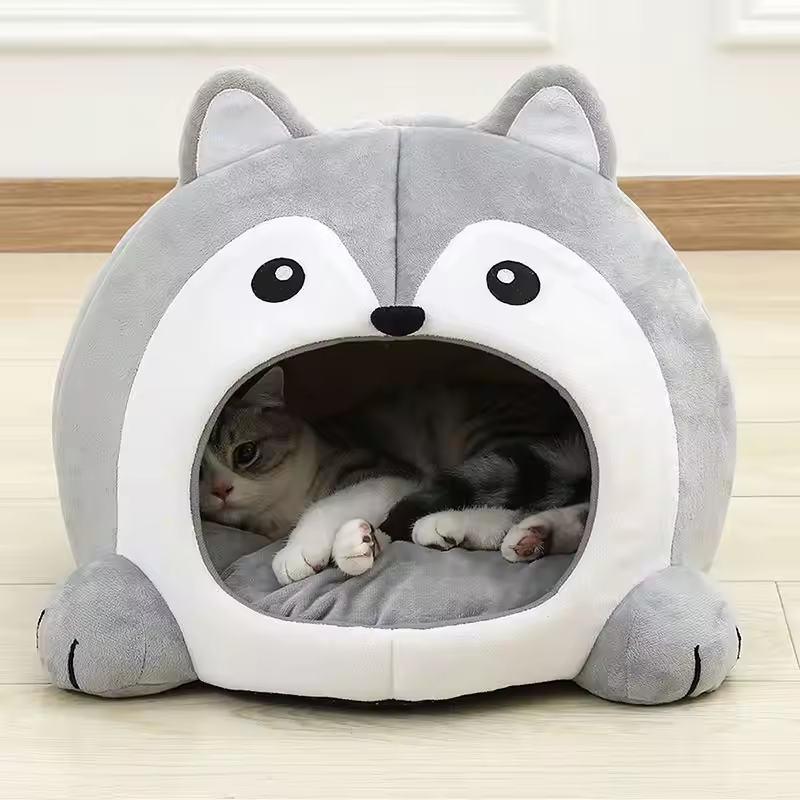
Given how much of a cat’s life is spent asleep, where they do it matters. A secure, enclosed spot like our Smart Cat Cave Bed taps into a cat’s instinct to sleep somewhere they feel genuinely safe, which tends to mean deeper, less interrupted rest. The Four Season Cat Soft and Comfortable Bed works well too, particularly for cats who prefer an open bed they can stretch out on rather than a hooded one.
One thing worth flagging: a sudden, noticeable increase in sleep — especially alongside reduced appetite, weight loss, or general withdrawal — is worth a vet visit rather than assuming it’s just normal cat behaviour, since illness can sometimes show up first as unusual lethargy.
Final Thoughts
Why do cats sleep so much really comes down to evolutionary energy conservation, a sleep style built around staying alert even at rest, and some genuine age-related variation on top. It’s not laziness so much as a deeply built-in survival strategy that never got the memo that the food bowl is now reliably full. Mew Vora ships worldwide, so wherever your cat’s favourite napping spot is, the right bed can make those many hours of sleep genuinely restful.
Shop cat beds and comfort essentials at mewvora.com/products — quality cat and dog essentials, delivered worldwide.