

One second they’re licking your hand affectionately, the next there’s a gentle bite out of nowhere. Why do cats bite then lick you is one of the more confusing cat behaviours, but it’s actually well understood.
It’s a strange sequence to witness — genuine affection one moment, a nip the next, sometimes followed by more licking as if nothing happened. Why do cats bite then lick you isn’t a sign of a badly behaved cat; it’s a mix of grooming instinct, sensory overstimulation, and communication that’s worth learning to read.
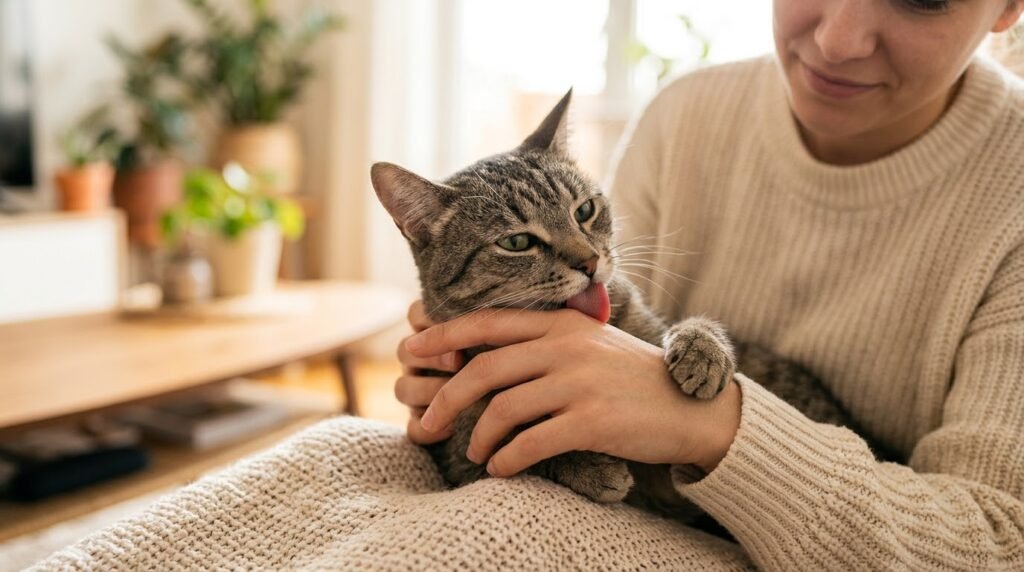
Why Do Cats Bite Then Lick You? The Grooming Behavior Theory
Cats who groom each other (called allogrooming) don’t just lick — they often mix in gentle, inhibited nibbling as part of the same social bonding ritual. If your cat treats you as part of their trusted social group, why do cats bite then lick you can simply be them replicating that same combined lick-and-nibble pattern they’d use on another cat they’re close to. In this context, it’s genuinely a form of affection, not a warning at all.Pin
Why Do Cats Bite Then Lick You? Overstimulation Is the Most Common Reason
This is the explanation behind most cases. Cats can genuinely enjoy petting for a while and then reach a sensory threshold where the same touch that felt good a minute ago starts to feel like too much. Once that threshold is crossed, a soft, inhibited bite is often how a cat says “that’s enough” — even if they were licking and purring moments before. It’s not aggression in the way it might look; it’s closer to a clear communication signal that petting needs to stop for now.
Why Do Cats Bite Then Lick You? Reading the Warning Signs Before It Happens
Most cats give warning signs before the bite, and learning to spot them makes a real difference:
- Tail flicking or lashing, even subtly, rather than a relaxed, still tail
- Ears rotating back or flattening slightly, rather than staying forward and relaxed
- Skin rippling along the back, sometimes visible as a subtle twitch
- A sudden stillness or tension after previously being loose and relaxed
Catching any of these and pausing the petting session before the bite happens is genuinely the most effective way to prevent why do cats bite then lick you from turning into an unwanted habit.
Why Do Cats Bite Then Lick You? Sometimes It’s Playful Instinct
Occasionally, a gentle bite mid-petting is really just a cat’s play drive kicking in — the same instinct behind chasing a toy can occasionally surface during a calm cuddle session, especially in younger or more energetic cats. If it happens paired with a playful body posture rather than tension, it’s more likely this than genuine overstimulation.
Managing It Without Discouraging Affection
Shorter, more frequent petting sessions tend to work better than one long one, since it’s easier to stop before the overstimulation threshold builds up. If your cat seems to be shifting into play mode mid-cuddle, redirecting that energy toward a Homefish Smart Cat Toy with Motion Sensor rather than your hands gives them a proper outlet without anyone getting nipped. Some owners also find cats tolerate a grooming session, such as with 2 Pcs Pet Grooming Gloves, for longer than direct hand-petting before reaching that same overstimulation point, worth trying if this is a frequent issue.

Final Thoughts
Why do cats bite then lick you really comes down to grooming instinct, a sensory threshold that’s easy to miss until you know what to look for, and occasionally simple playfulness. None of it usually means anything’s wrong — it’s just a cat communicating in the only way they have available. Mew Vora ships worldwide, so wherever your cat’s next cuddle-then-nip session happens, the right toys and tools can help keep things affectionate on both sides.
Shop cat toys and grooming essentials at mewvora.com/products — quality cat and dog essentials, delivered worldwide.