

For most cats, the carrier only ever comes out for one reason: the vet. So the moment it appears, the hiding starts, the meowing starts, and the trip hasn’t even begun. Traveling with a cat is a genuinely different challenge from traveling with a dog — cats are territorial, routine-driven animals, and a moving car strips away almost everything that normally makes them feel safe. The good news is that most of what makes cats miserable in the car is preventable, and it usually comes down to preparation that starts weeks before departure, not the morning of.
The Mistake Most Owners Make: Only Bringing Out the Carrier for the Vet
If the carrier lives in the attic or garage and only appears right before a stressful appointment, your cat has already learned everything they need to know about it. By the time you’re trying to load them in for an actual trip, they’re working against a negative association that’s been building for years. The single biggest shift you can make isn’t a product or a gadget — it’s turning the carrier into a normal, boring, everyday object long before you ever need it for real.Pin
Why Car Travel Is Harder on Cats Than Dogs
It’s not your imagination — cats generally do find travel harder than dogs, for a few clear reasons:
- They’re territorial. A cat’s sense of safety is built around a familiar space. A car has none of it.
- They’re routine-driven. Skipped meals, a missed litter box visit, or an unfamiliar sleeping spot register as bigger disruptions for cats than for most dogs.
- They’ve likely built a negative association. If the only past car rides ended at the vet, the car itself becomes a warning sign.
- They can’t be reasoned with through exercise or distraction the way dogs often can. Cats don’t calm down from a walk at a rest stop.
- Free-roaming is genuinely dangerous. An unrestrained cat can end up under your feet, under the pedals, or bolting the second a door opens.
How to Prepare for Traveling with a Cat
Most of this works because it happens well before travel day, not during it:
Start carrier training weeks in advance. Leave the carrier out in a normal room, door open, with a blanket inside. Feed your cat near it, then in it, so it becomes a place with good associations instead of a warning sign.
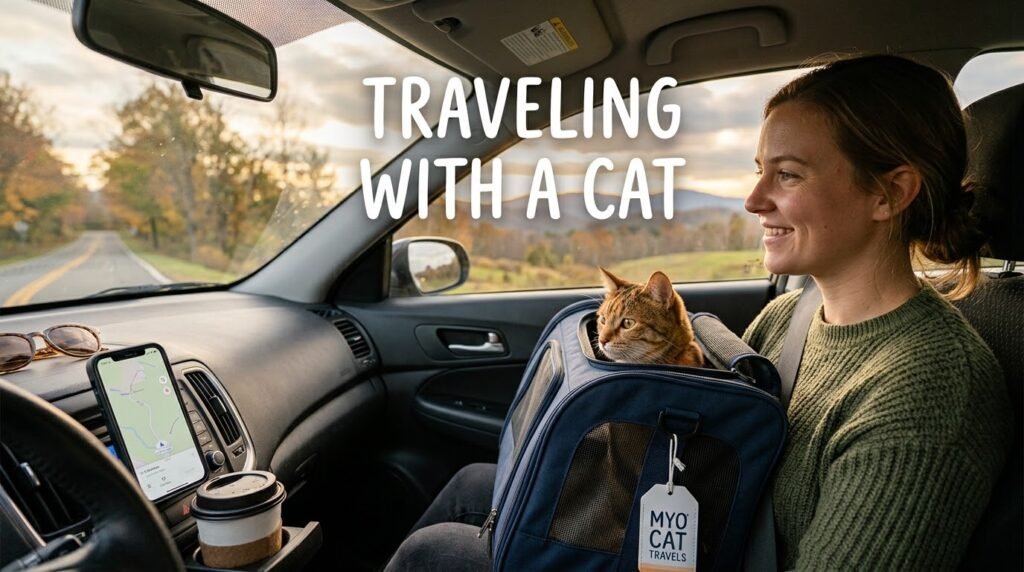
Never let your cat roam free in the car. A secured carrier, buckled in or wedged securely on the back seat, is the only safe way to travel. If your cat needs to be out for any reason, a well-fitted harness and leash should stay on first.

Practice with short drives. A few five- or ten-minute trips around the block, building up gradually, does more than any single product to prepare a cat for a longer journey.
Limit food before departure. A lighter meal a few hours ahead — not right before — helps reduce motion sickness.
Pack for litter breaks on longer trips. For journeys over a few hours, a small portable litter tray and time built into your stops matters more than most owners expect.
Bring familiar scents. A blanket or bed your cat already sleeps on carries their own scent into an unfamiliar space, which does a lot of the calming work on its own.
Confirm ID and microchip details. Cats that do get loose during a stop are far more likely to be recovered if this is up to date before you leave.
Signs Your Cat Is Struggling in the Car
Watch for these throughout the trip, not just at the start:
- Constant meowing or yowling that doesn’t settle after the first few minutes
- Hiding at the back of the carrier and refusing to reposition
- Excessive drooling or panting
- Repeated attempts to claw or push out of the carrier
- Vomiting or refusing water at rest stops
Any of these are worth a longer break, and if they continue on every trip, a conversation with your vet about additional support is worthwhile.
A Familiar Spot Worth Bringing
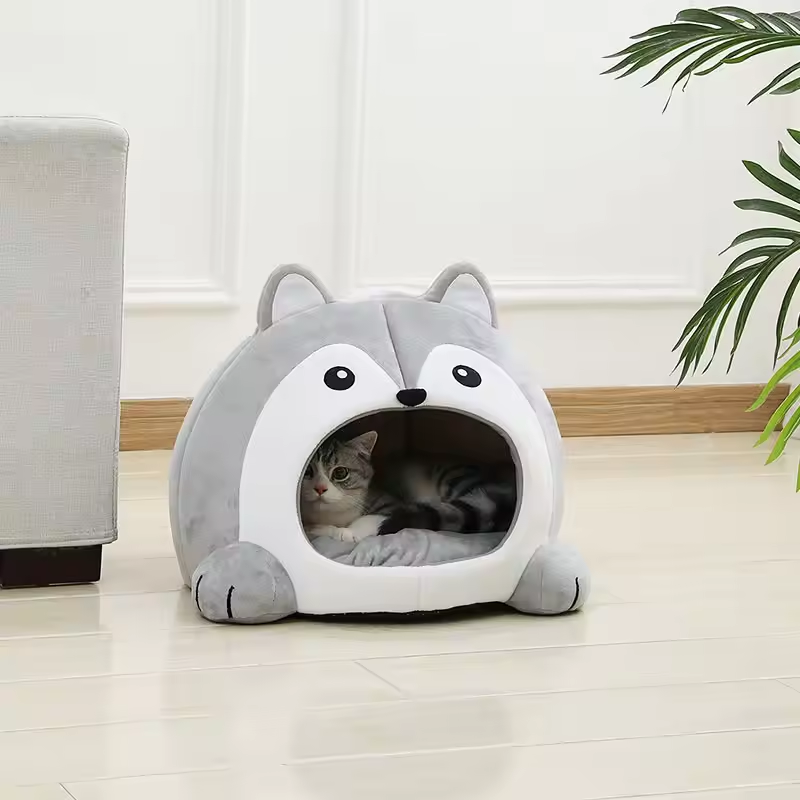
Since so much of what stresses cats out while traveling comes down to losing their sense of a safe, enclosed space, bringing one with you helps more than almost anything else on this list. Our Smart Cat Cave Bed is built around exactly that instinct — an enclosed, den-style shape that gives a cat somewhere to retreat into and feel hidden, rather than exposed, once you’ve arrived at an unfamiliar hotel room or a relative’s house. It won’t replace a proper carrier for the drive itself, but as the “safe base” at your destination, it does a lot of the settling-in work for you. We ship it worldwide, backed by our 15-day return policy.
Making the Trip Smoother
A few more habits that make a real difference over the course of a trip:
- Keep the carrier in the back seat, not the boot or trunk, so your cat isn’t isolated from you
- Call ahead to confirm your stops and accommodation are actually cat-friendly, not just pet-friendly in general
- Stick as close as possible to your cat’s normal feeding and litter schedule, even on the road
- Set up the same bed, litter tray, and bowl the moment you arrive, rather than waiting until you’ve unpacked everything else
The Bottom Line
Traveling with a cat asks more of the preparation than the packing list. A carrier your cat already trusts, a car they’ve been gradually introduced to, and a familiar space waiting for them at the other end will do more for a smooth trip than any last-minute purchase — wherever that trip happens to take you.
Cat Products Buy Now At mewvora.com.