

If you’ve ever watched your cat stalk a dust bunny across the floor with the intensity of a jungle predator, you already know the truth: your fluffy couch potato has a wild side. Cats are born hunters — wired by millions of years of evolution to stalk, chase, pounce, and problem-solve. The trouble is, modern indoor life doesn’t always give them much to work with.
That’s where smart cat toys come in.
In this guide, we’re breaking down everything you need to know — why smart toys matter, which types are best, how to choose the right one for your cat’s personality, and how to rotate them for maximum effect. Whether you’re a first-time cat parent or a seasoned feline enthusiast, this is the resource you’ve been looking for.
What Are Smart Cat Toys?
Smart cat toys are a step above the classic feather on a stick or a crinkle ball. They use technology — sensors, motors, automated timers, app connectivity, or randomized movement algorithms — to engage your cat independently, without you needing to hold the other end.
Think self-rolling balls that dodge walls on their own. Laser pointers that sweep random patterns across the floor every few hours. Electronic butterflies that flutter to life when your cat walks by. Robotic mice that dart and stop unpredictably, just like real prey. Even puzzle feeders that force your cat to earn their treats by problem-solving.
The defining characteristic of a smart cat toy is that it challenges both the body and the mind — and it often does so autonomously, making it ideal for busy cat owners who can’t be home all day.
Why Your Indoor Cat Needs More Than a Stuffed Mouse
Let’s be real. Indoor cats have it good — safe from traffic, predators, and the elements. But that safety comes at a cost. Without the dynamic stimulation of the outdoors, many indoor cats live in a state of chronic under-stimulation.
The results? You’ve probably seen them: scratched furniture, knocked-over glasses, 3 a.m. zoomies, or a cat that just seems… flat. Lethargic. Disengaged.
This isn’t just a behavior problem — it’s a health issue. Research indicates that cats left alone for more than six hours a day experience significantly higher stress levels. And without regular physical activity, indoor cats are at serious risk of weight gain, with some estimates suggesting a majority of indoor cats are overweight due to inactivity.
The good news is that the right toys are genuinely transformative. When cats engage in regular, stimulating play, they experience measurable benefits across the board: Pinterest
Physical health. Active play burns calories, keeps joints supple, and helps maintain a healthy weight — reducing the risk of diabetes, arthritis, and heart disease down the line.
Mental sharpness. Puzzle toys and unpredictable motion toys challenge problem-solving skills and keep the brain firing. Just like humans, cats can experience cognitive decline as they age — and regular mental engagement is one of the best preventive measures available.
Emotional wellbeing. Play triggers the release of endorphins and dopamine in a cat’s brain — the same feel-good chemicals that reduce stress in humans. A cat that plays regularly is a calmer, more contented cat.
Behavior management. Most destructive behaviors in cats — excessive scratching, aggression, overgrooming — stem from boredom and frustration. A mentally engaged cat simply has less need to take it out on your couch.
Reduced separation anxiety. Smart toys that operate independently give your cat something to engage with while you’re at work — filling that solo time with stimulation rather than silence.
The 6 Types of Smart Cat Toys (And What They’re Best For)
1. Automated Laser Toys
The classic laser pointer has been updated for the modern era. Automated laser toys use motors and randomized programming to sweep a laser point across the floor and walls in unpredictable patterns — no human holding required.
These are brilliant for high-energy cats who need a serious cardio workout. The random movement patterns keep cats more engaged than predictable circles, and the best models include auto-shutoff features, motion sensors that activate the toy when your cat enters the room, and multiple speed modes.
Best for: Active cats, kittens, and cats that tend to lose interest quickly.
Pro tip: Always end a laser session with a physical toy your cat can actually “catch” — a feather wand, a plush mouse, anything. Laser play that never ends in a capture can leave some cats frustrated.
2. Self-Rolling and Motion-Sensor Balls
These compact toys roll, bounce, and change direction on their own — some in response to your cat’s touch, others on automated timers. The better models are built with 360-degree rolling ability so they never get stuck in corners, and they use irregular patterns that mimic the erratic movement of prey.
Some versions also incorporate feather tails, which adds another sensory dimension. Cats can bat at them, chase them, carry them, or simply watch them — all valid forms of engagement.
Best for: Solo play, keeping cats busy while owners are at work, and cats that love chasing.
What to look for: USB rechargeability (much more practical than batteries), auto-shutoff timers to prevent overstimulation, and a durable exterior that can withstand a serious pounce.

3. Electronic Wand and Teaser Toys
These are the tech-forward evolution of the classic wand toy. Instead of you waving it around, a motor does the work — spinning feathers, ribbons, or insect-shaped lures in unpredictable patterns around a central base.
Many versions come with timer settings so the toy activates for set periods throughout the day, keeping your cat’s environment dynamic even when you’re not home. Some have multiple speed settings so you can dial up the intensity for playful moods or slow things down for a calm evening session.
Best for: Cats who go wild for feathers, cats that need encouragement to engage, and multi-cat households where shared play is beneficial.
4. Puzzle Feeders and Treat Dispensers
Not all smart cat toys involve frantic movement. Puzzle feeders tap into a different kind of instinct — the problem-solving, foraging side of a cat’s hunting drive.
These toys require your cat to manipulate, paw, nudge, or dig to release their food or treats. They slow down fast eaters, provide mental stimulation even during mealtimes, and are especially excellent for cats who seem more cerebral than athletic.
Some high-end versions combine physical movement with treat dispensing — rolling balls that release kibble as your cat bats them around, for example. It’s a genuinely elegant solution to both boredom and overeating.
Best for: Food-motivated cats, fast eaters, senior cats, and cats that seem bored by pure motion toys.
5. App-Controlled and Wi-Fi Toys
For the truly tech-forward cat parent, app-controlled toys let you engage with your cat remotely — driving a robotic toy around your living room from your phone during your lunch break, or adjusting a laser pattern while you’re in another room.
Some of the most sophisticated versions in this category track your cat’s activity levels, log play sessions, and even generate data about your cat’s health and energy patterns over time. It’s a genuinely useful feature for owners who want to monitor whether their cat is staying active.
Best for: Cats with separation anxiety, owners who travel frequently, and cat parents who want more insight into their cat’s daily behavior.
6. Robotic Prey Toys
These are arguably the most instinct-satisfying category. Robotic mice, fish, birds, and insects that move with realistic, unpredictable motion — darting forward, stopping, changing direction, making sounds — give cats the closest thing to actual hunting that a toy can provide.
The auditory element matters here. Toys that incorporate chirping sounds mimicking birds, or skittering sounds mimicking rodents, activate your cat’s attention at a neurological level that purely silent toys simply can’t match.
Best for: Cats with strong prey drives, cats that seem bored with simpler toys, and kittens building their hunting instincts.
How to Choose the Right Smart Toy for Your Cat
Not every cat is going to fall for every toy, and understanding your cat’s personality is the key to a worthwhile investment. Here’s a simple framework:
For the athletic, high-energy cat: Prioritise motion — laser toys, rolling balls, and electronic wand toys. Look for multiple speed settings and random motion patterns. The less predictable, the better.
For the cerebral, slower-paced cat: Puzzle feeders, treat dispensers, and foraging toys are your friends. These cats are often more motivated by food rewards than by chasing something across the floor.
For the anxious or shy cat: Start with toys that move gently and predictably, then gradually introduce more stimulating options. Avoid anything too loud or erratic at first. The goal is confidence-building through play.
For the senior cat: Gentler movement, lower speed settings, and shorter play sessions are ideal. Puzzle feeders are particularly good because they engage the mind without demanding intense physical exertion.
For the kitten: Almost anything goes — but supervision is especially important, and avoid toys with small detachable parts that could become choking hazards.
Safety First: What to Watch Out For
Smart toys are genuinely great, but a few considerations will help you keep playtime safe:
Supervision for new toys. Always introduce a new toy with you present for the first few uses. This lets you check for any parts your cat might chew off or swallow.
No small detachable parts. Some toys have tails, ribbons, or feather attachments that can be pulled free. Check for these regularly and replace or remove them if they become loose.
Material safety. Look for toys made with non-toxic materials. If a toy has a strong chemical smell when it arrives, let it air out before giving it to your cat.
Auto-shutoff is your friend. Toys that run continuously can lead to overstimulation — some cats will play to the point of exhaustion if given the chance. Choose toys with automatic timers and rest modes built in.
Lasers and eye safety. Only use laser toys with low-powered, pet-safe lasers. Never shine any laser directly at your cat’s eyes.
The Rotation Strategy: Why One Great Toy Isn’t Enough
Here’s something every experienced cat owner knows: cats get bored with their toys. Even the most beloved feather wand loses its magic if it’s available 24/7.
The solution is simple — rotate. Keep three or four toys in circulation at any given time, and swap them out every one to two weeks. When a “retired” toy comes back out of the drawer, it’s new again. Your cat has essentially reset their interest in it.
This approach also lets you observe which types of toys your cat consistently gravitates toward, helping you make smarter purchases over time.
And importantly, no smart toy should completely replace interactive play with you. Even fifteen to twenty minutes of dedicated playtime with your cat each day has enormous benefits — for their wellbeing and for the bond between you.
A Final Word from Mewvora
At Mewvora, we believe that a well-stimulated cat is a happy cat — and a happy cat makes for a better life for everyone in the household. Smart cat toys aren’t a luxury or a gimmick. They’re a genuinely practical tool for giving your indoor cat the mental and physical engagement their nature demands.
You don’t need to buy every gadget on the market. Start with one or two toys that match your cat’s personality, observe how they respond, and build from there. The investment is small. The difference in your cat’s daily quality of life? Anything but.
Explore our full range of reviewed smart cat toys at Mewvora.com — curated with love, tested by real cats.
-
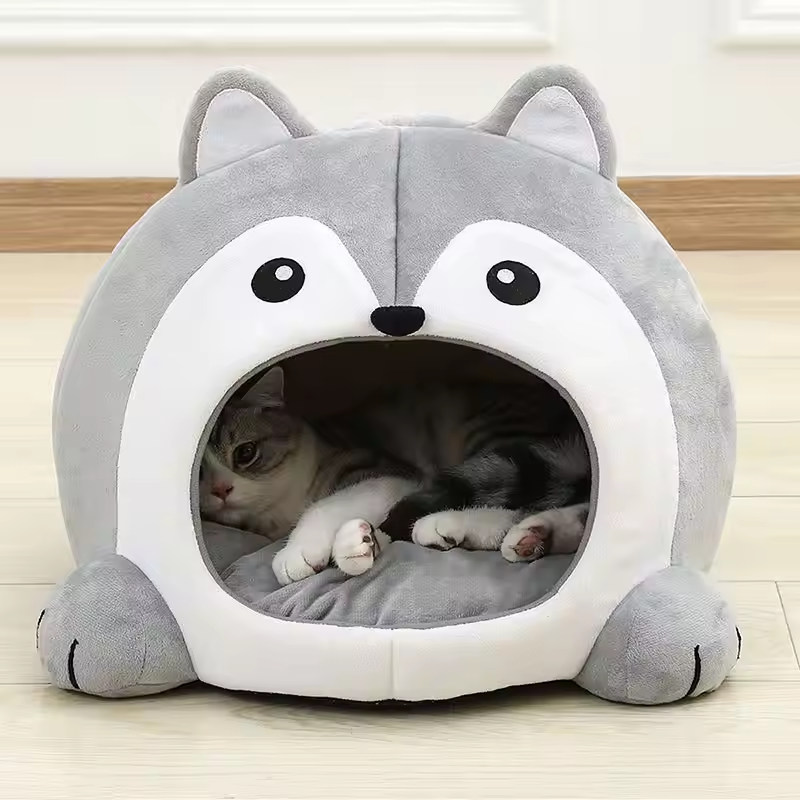
Smart cat cave bed
Price range: £29.99 through £35.99
Frequently Asked Questions About Smart Cat Toys
Are smart cat toys safe to leave on when I’m not home? Most modern smart cat toys are designed with auto-shutoff timers specifically for unsupervised use. Always read the product instructions and introduce any new toy with supervision before leaving it running solo.
How long should my cat play each day? Most vets and animal behaviorists recommend at least 20 to 30 minutes of active play per day, split into two or more sessions. This can include a mix of smart toy time and interactive play with you.
My cat ignores every toy I buy. What am I doing wrong? Some cats need time to warm up to a new toy — try introducing it at a distance first, or add a tiny bit of catnip to increase initial interest. It’s also worth experimenting with different toy types; a cat that ignores a laser toy might go absolutely wild for a puzzle feeder, and vice versa.
How often should I replace smart cat toys? Check toys regularly for wear and damage, especially any moving parts, feathers, or cords. Replace any toy that’s showing significant wear, has loose pieces, or has stopped functioning correctly.
Do smart toys work for multiple cats? Absolutely — in fact, shared toy sessions can be great for bonding between cats in a multi-cat household. Just make sure no single cat is monopolising the toy, and consider having more than one running at a time if competition becomes an issue.