

Somewhere around age seven or eight, most dogs start doing something their owners rarely notice right away: they get up a little slower. They circle twice instead of once before lying down. They choose the cool kitchen tiles over the bed they’ve slept on for years. None of this looks urgent, so it gets missed — and that’s exactly why so many older dogs spend their most sensitive years sleeping on the wrong setup. A senior dog bed isn’t a cosmetic upgrade. It’s one of the few changes that directly affects how much discomfort your dog is in, every single night.

The Mistake Most Owners Make: Keeping the Same Bed Forever
Here’s the pattern we see over and over. A dog gets a bed as a puppy or young adult. It’s comfortable, it looks great, the dog loves it — so nobody thinks to replace it. Five, seven, ten years pass. The filling flattens. The support that used to cushion a young, springy body has compressed into something closer to a rug than a mattress. Meanwhile, the dog lying on it has developed stiffer joints, thinner natural padding over its hips and elbows, and a lot more hours a day spent lying down.
The bed didn’t change. The dog did. That mismatch — not neglect, just inertia — is the single biggest reason older dogs end up sore, restless, or sleeping on the floor instead of in the bed you bought them.Pin
What Actually Changes As Dogs Get Older
A few things happen with age that make bedding matter more, not less:
- Joints stiffen. Early arthritis is extremely common in senior dogs, even ones who show no obvious limp. Pressure points on hard or flattened surfaces become genuinely painful.
- Natural padding thins. Older dogs lose muscle and fat over bony areas like the hips, shoulders, and elbows, so there’s less built-in cushioning between them and whatever they’re lying on.
- They sleep more. Senior dogs often rest 14+ hours a day. A bed that’s slightly wrong is a problem your dog is dealing with for most of their waking — and sleeping — life.
- Temperature regulation gets harder. Older dogs are more sensitive to cold floors and drafts.
- Routine matters more. A stable, familiar, easy-to-reach resting spot becomes more important as dogs age, especially if their hearing, vision, or memory is also starting to change.
How to Choose the Right Senior Dog Bed
Tphis is where most people default to guessing based on looks. Instead, run any option through these criteria:
Supportive fill that won’t flatten fast. Look for a bed with a genuinely thick, resilient base — not a thin layer of stuffing that will compress within months.
Low, easy entry. Older dogs shouldn’t have to climb or jump to get comfortable. Bolstered or raised-rim designs are fine as long as the entry point stays low.
A washable cover. Senior dogs are more prone to accidents, shedding, and general mess. A removable, machine-washable cover isn’t a bonus feature — it’s essential.
A non-slip base. Stiff joints and slippery flooring are a bad combination. A grippy underside reduces the chance of your dog sliding or straining while lying down or standing up.
Enough room to fully stretch out. Some older dogs still like to curl up, but many prefer to stretch flat as joints get stiffer. Size up if you’re unsure.
A warm, quiet, draft-free spot. Where the bed sits matters almost as much as the bed itself — away from cold floors, direct AC or heating vents, and high-traffic areas.
Signs Your Dog Has Outgrown Their Current Bed
Watch for these — they’re easy to miss because they develop gradually:
- Choosing the floor, sofa, or tiles over their own bed
- Visible flattening, lumps, or thin patches in the filling
- Stiffness or slow movement specifically when getting up from the bed
- Circling or repositioning repeatedly before settling
- Reluctance to lie fully on their side
Any one of these is a reasonable prompt to reassess what your dog is actually sleeping on.
A Senior-Friendly Option Worth Considering
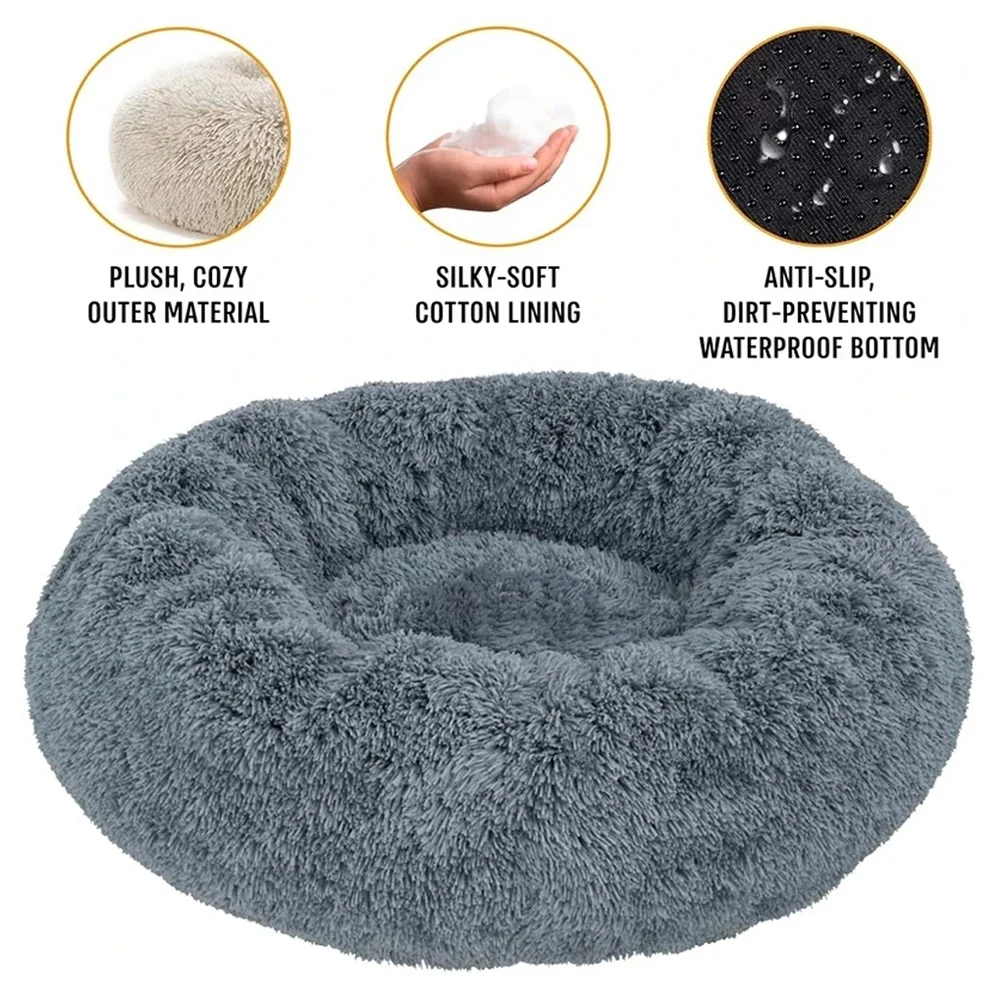
We built our Donut Dog Bed, Fluffy Plush Round Cat Bed with exactly this kind of comfort in mind. The raised, plush rim gives dogs something soft to rest their head and neck against, the round shape suits dogs who like to curl in rather than sprawl flat, and it comes in a range of sizes so you’re not stuck squeezing a large senior dog into a bed built for a puppy.
To be upfront about it: if your dog is large-breed, has diagnosed arthritis, or has real trouble lying down and getting up, a low, flat, firmer mattress-style bed is usually the better first choice, and that’s worth discussing with your vet. For small to medium senior dogs, and dogs who’ve always preferred curling up over stretching flat, the donut style holds up well and gives that added sense of security many older dogs seek out. We ship it worldwide, and it’s covered by our 15-day return policy if it isn’t the right fit.

Helping Your Older Dog Settle In
A few small things make the transition to a new bed smoother:
- Keep the old blanket or a familiar-smelling item on the new bed for the first week or two
- Place it somewhere central to family activity, but out of the main walking path
- If your dog is used to jumping onto furniture, consider a small ramp or step nearby
- Check the bed every few months for flattening — most beds under daily senior use need replacing every 12–18 months, even if they still look fine from the outside
The Bottom Line
A senior dog bed isn’t about spoiling an older dog — it’s about not quietly asking a dog with stiffer joints and thinner padding to keep sleeping on a setup built for a much younger version of themselves. Get the support, access, and size right, and you’re removing one real source of daily discomfort, worldwide shipping and all.