

This blog covers what genuinely matters when choosing bed.A puppy bed guide UK: size, materials, chew-resistance, house training, and when to finally retire it for your dog’s “forever bed.”
Bringing a puppy home is one of those moments you replay for years afterwards — the wobbly first walk through the front door, the frantic sniffing of every corner, the inevitable trip over their own paws. Somewhere in the middle of all that excitement, most new owners grab whatever bed looks cutest in the shop window and hope for the best.
Six weeks and one shredded cushion later, they’re back looking for something that actually survives contact with a puppy.
Quick answer: the best puppy bed for most UK owners is a small or medium, fully machine-washable bed with a durable, chew-resistant cover and a non-slip base — something affordable enough to replace once or twice before your dog is grown and has stopped treating it as a chew toy.pin

Why the Right Puppy Bed Matters More Than You’d Think
It’s tempting to treat a puppy bed as an afterthought — just something soft to put in the corner. In practice, it does a lot of quiet work in those first few months.
A consistent bed gives a puppy a sense of “this spot is mine,” which matters enormously for a small animal who’s just been taken away from its mother and littermates. It also plays a role in settling them at night, in crate training, and in giving them somewhere safe to retreat to when the house gets loud or a toddler gets a bit too enthusiastic.
Then there’s the practical side. Puppies chew. They have accidents. They grow, sometimes at an alarming rate. A bed that isn’t built with all three of those in mind tends to have a short and expensive life.
What to Look for When Choosing a Puppy Bed
Size — buy for now, not for later
It’s a common instinct to buy a bed sized for the dog your puppy will eventually become. Resist it. A bed that’s too big doesn’t feel secure to a small puppy — most breeds actually prefer something snug enough that they can feel the sides around them, similar to how they’d have curled up with littermates.
The better approach is to buy a size that suits your puppy now, or one stage up at most, and plan to upgrade once or twice as they grow. Yes, that means buying more than one bed over the first year. It also means each one earns its keep rather than sitting unused because it’s the wrong shape for a ten-week-old.
Chew-resistant material
This is the one people underestimate the most. Teething typically runs from around three to six months, and during that window, an ordinary soft-furnishing-grade bed is basically a chew toy with a padding budget. Look for reinforced stitching, tightly woven outer fabric, and covers described as chew-resistant or heavy-duty rather than anything with loose trims, ribbons, or decorative bits that can be pulled off and swallowed.
Machine-washable cover
Puppies are, without exception, messy. Muddy paws, occasional accidents, the odd bit of regurgitated breakfast — a bed you can unzip and throw straight in the washing machine will save you more stress than almost any other feature on this list. A removable, washable cover is genuinely a non-negotiable, not a nice-to-have.
A degree of waterproofing
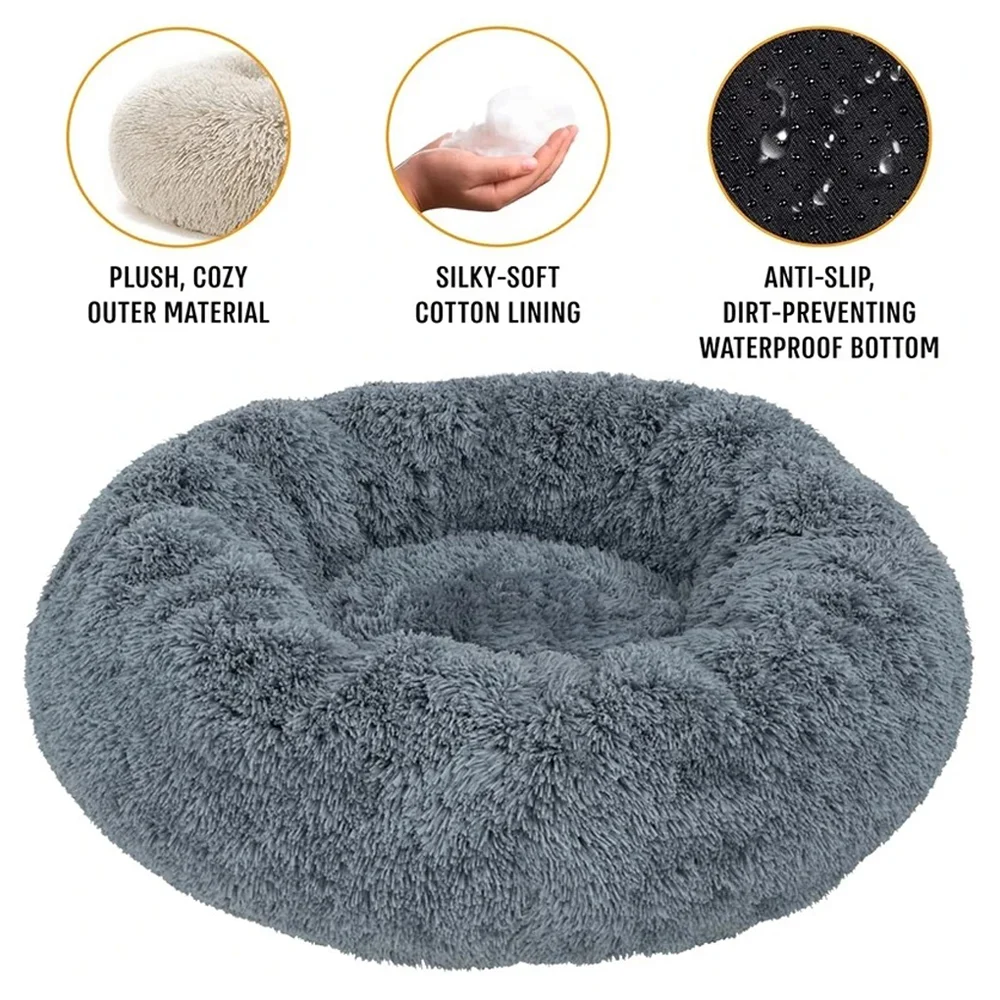
Even the best house-training goes wrong sometimes, especially overnight. A bed with a water-resistant inner layer, or one designed to be quick-drying, means an accident is a five-minute clean-up rather than a ruined bed. [LINK: your Waterproof Dog Bed UK guide] goes into more detail on what to look for if this is a priority — and it’s worth prioritising for any puppy still being house-trained.
Safe, secure filling
Avoid beds filled with polystyrene beads or anything a curious puppy could tear into and swallow. Solid foam or firmly secured polyester filling, fully enclosed in a durable inner lining, is the safer option while your dog is still working out that stuffing isn’t food.
Non-slip base
Puppies barrel around corners long before they’ve worked out how to stop. A non-slip base keeps the bed from sliding across laminate or tiled floors, which matters both for the bed’s lifespan and for your puppy not skidding into the skirting board.
Types of Puppy Beds Explained
Crate mats and pads — a flat, low-profile pad sized to fit inside a crate. The obvious choice if you’re crate training, since it gives a defined “this is your space” area without taking up excess room.
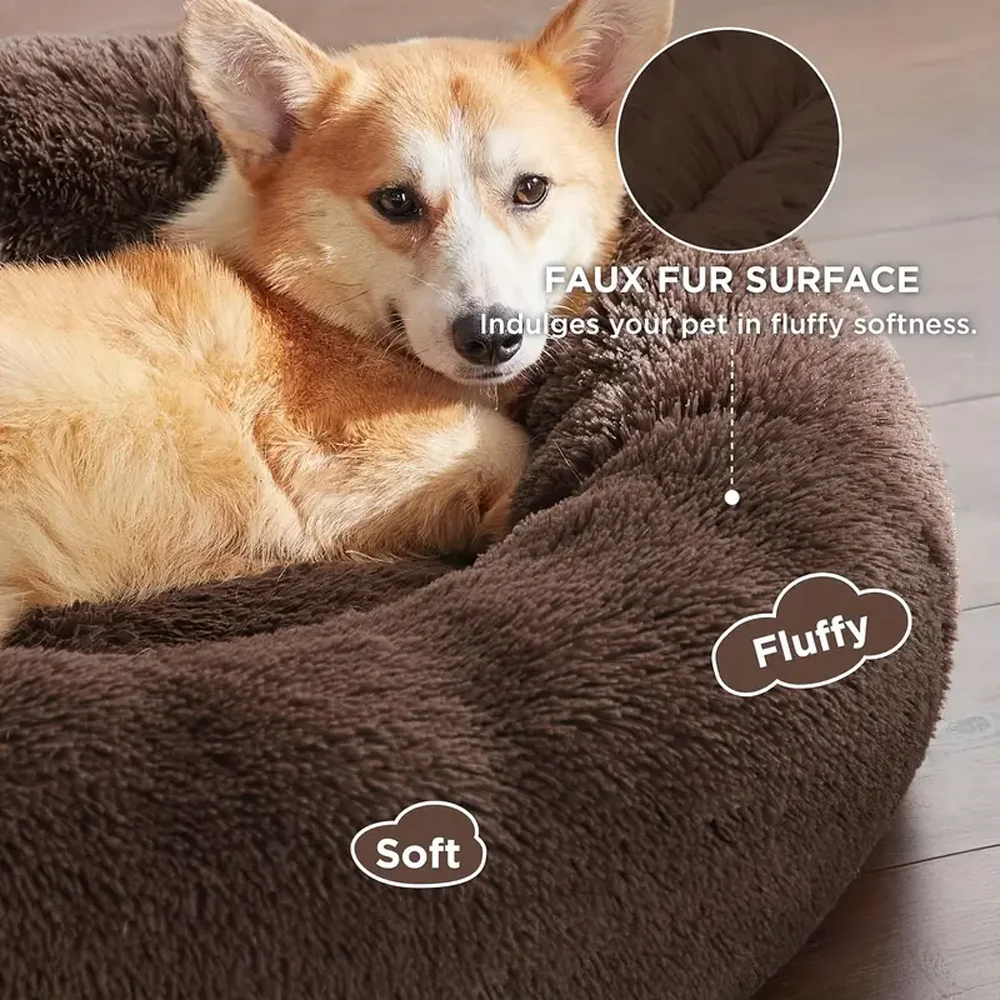
Donut or nest-style beds — raised, cushioned sides with a lower centre. These tend to suit puppies particularly well, since the raised edge recreates the feeling of being curled up against something, which is a big part of why dogs of all ages gravitate towards them. [LINK: your Donut Dog Bed UK guide] covers the design in more depth if you want to see why the shape works.
Flat mattress beds — simple and inexpensive, which makes them a sensible choice for the messiest, most destructive early months, when you may go through more than one bed regardless of how well it’s made.
Orthopedic or memory foam beds — worth knowing about, but not something your puppy needs yet. These are built to support joints, and a growing puppy’s joints and growth plates are still developing — a supportive, structured foam bed is far more useful once they’re a fully grown adult, not before. Save this upgrade for later.
Puppy Bed Size Guide by Adult Breed Weight
Since puppies are bought for the dog they’ll become as much as the one they are now, it helps to have a rough idea of what “small,” “medium” and “large” actually mean:
- Small breeds (roughly 5–10kg fully grown) — Chihuahuas, Dachshunds, Pugs, Yorkshire Terriers
- Medium breeds (roughly 10–25kg fully grown) — Cocker Spaniels, Border Collies, Bulldogs
- Large breeds (roughly 25–40kg fully grown) — Labradors, German Shepherds, Golden Retrievers
- Giant breeds (40kg+ fully grown) — Great Danes, Mastiffs, Newfoundlands
If you’re not sure which category your puppy will land in, size up slightly rather than down, but keep the “snug, not swimming in it” principle in mind for the first bed especially.
Where to Position Your Puppy’s Bed
Location matters almost as much as the bed itself. Puppies are naturally social animals and can find total isolation stressful, so a spot in a quiet corner of a family room tends to work better early on than a bed tucked away in an empty room. It should be somewhere draught-free, away from radiators and direct sunlight, and — ideally — the same spot every day. Puppies settle faster with a predictable routine, and “the bed always lives here” is one of the easiest routines to give them.
If you’re crate training, the bed usually lives inside or right beside the crate, so the two become associated with each other as one calm, safe space rather than competing options.
Puppy Beds and House Training
Overnight accidents are close to universal in the first few weeks, no matter how good your training routine is. A couple of things make this easier to manage:
- A washable, water-resistant bed means an accident is a wash cycle, not a write-off.
- Keeping the bed inside a crate or a confined area overnight limits the mess to a small, easy-to-clean zone.
- Resist the urge to punish accidents near the bed — it can create anxiety around the sleeping area itself, which tends to make house training slower, not faster.
How Long Will a Puppy Bed Last — and When Should You Upgrade?
Realistically, most puppy beds last somewhere between a few months and the end of the teething period, depending on how determined a chewer your dog turns out to be. There’s no shame in buying a genuinely budget option for month one purely because it might not survive month two.
The natural upgrade point is once teething has settled — usually somewhere around six to eight months — and growth has slowed enough that you have a reasonable idea of their adult size. That’s the point to invest in a proper “forever bed”: something larger, more supportive, and built to last years rather than months. [LINK: your Best Dog Beds UK 2026 guide] is a good next stop once you’re at that stage.
How to Keep a Puppy Bed Clean
A quick routine goes a long way:
- Wash removable covers every one to two weeks, or immediately after any accident.
- Vacuum or shake out the base regularly to clear hair, dirt, and the crumbs of whatever chew treat has met its end nearby.
- Air dry fully before putting the cover back on — a damp bed is an unpleasant, and slightly funky-smelling, invitation for your puppy to look elsewhere to sleep.
FAQs
Do puppies actually need a special bed, or will an old blanket do? A blanket can work in the very first few days, but a proper bed with structure and raised sides tends to help puppies settle faster, and it holds up far better to chewing and accidents than loose bedding will.
What’s the best material for a puppy bed? Look for a tightly woven, reinforced outer fabric with no loose trims, paired with a fully washable, removable cover. Avoid loose stuffing types your puppy could pull apart and swallow.
Should I put a blanket inside the crate as well as a bed? A thin, washable blanket on top of a crate mat is fine and can add extra comfort, but avoid anything so thick or loose that it becomes a chew hazard or a hiding spot for accidents.
How big should a puppy’s bed be? Big enough for your puppy to fully stretch out, but snug enough that they can still feel the sides — oversized beds tend to feel less secure to very young puppies.
Can I just buy the adult bed straight away to save money? You can, but most puppies do better with a snugger bed early on, and an expensive adult bed is a costly thing to hand over to a teething puppy. A cheaper interim bed usually works out better value overall.
Final Thoughts
The right puppy bed isn’t about finding the cutest option in the shop — it’s about picking something sized for right now, tough enough to survive teething, and easy enough to wash that accidents aren’t a disaster. Get that right, and you’ll spend a lot less time replacing beds, and a lot more time enjoying the extremely short window where your dog is still small enough to fit in one.