

If you’ve ever watched your cat wedge themselves into the smallest, warmest gap they can find the moment the heating clicks on, you already know something most new cat owners don’t: cats feel the cold far more than their fluffy coats let on. As the UK heads into another damp, draughty winter, a few small changes at home can make a real difference to how comfortable — and how healthy — your cat stays.
Here’s a proper, no-nonsense guide to keeping your cat warm this winter, along with a few product pointers if you’re shopping for winter upgrades.
Why cats feel the cold more than you’d think
Cats evolved from desert-dwelling ancestors, which means their natural instinct is to seek out warmth, not tolerate cold. A cat’s comfortable temperature range sits noticeably higher than ours — somewhere around 20-25°C — so a house that feels perfectly cosy to you can still feel chilly to your cat, especially once the central heating switches off overnight.
Older cats, kittens, short-haired breeds (think Siamese or Sphynx), and cats with health conditions like arthritis or kidney disease are especially vulnerable to the cold. Their bodies simply can’t regulate temperature as efficiently, and cold joints tend to feel stiffer and more painful.
Signs your cat is too cold
Cats aren’t always obvious about discomfort, but there are tells worth watching for:
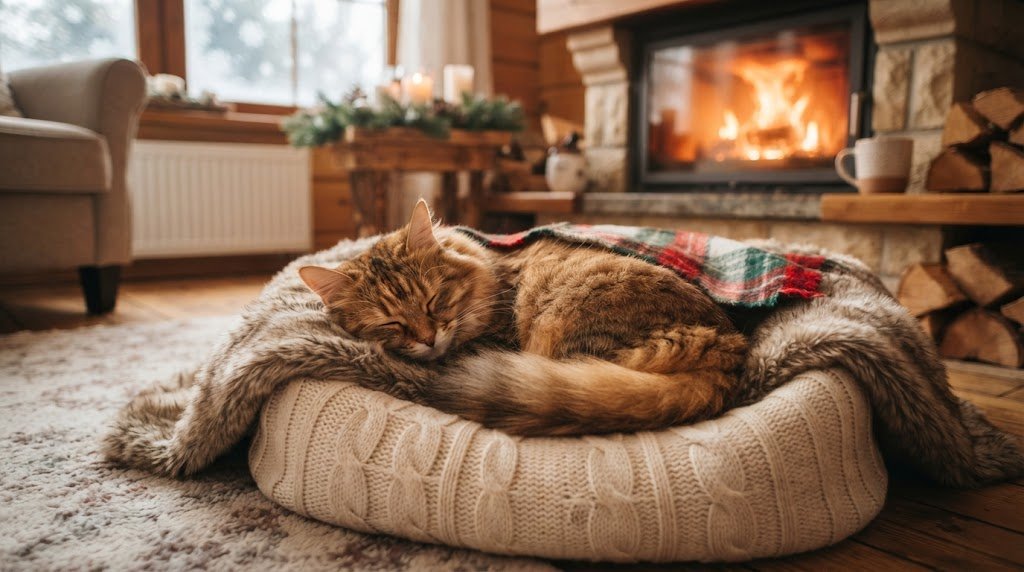
- Curling into a tighter-than-usual ball, tail wrapped fully around the body
- Seeking out radiators, laptops, or sunny patches obsessively
- Shivering, which in cats is a genuine warning sign, not just a quirk
- Reduced appetite or reluctance to move around
- Cold ears or paws to the touch.pin
If you notice several of these together, it’s worth warming up their environment straight away — and if shivering or lethargy persists, a vet check is sensible, particularly for older cats.
Simple ways to keep your cat warm at home
You don’t need to overhaul your house to keep a cat comfortable through a British winter. A few practical habits go a long way:
- Draught-proof their favourite spots. Cats often choose sleeping spots near windows or doors without realising how draughty they are. A simple draught excluder or moving their bed a foot or two can help.
- Layer up their sleeping area. A blanket over their usual bed, or a bed raised slightly off cold flooring, keeps heat from leaching away.
- Keep at least one warm room accessible. If you’re limiting heating to save costs (a very common UK winter reality), make sure your cat has access to whichever room stays warmest.
- Brush regularly. A well-maintained coat traps air and insulates far better than a matted one — more on this below.
Choosing the right bed for winter
This is where bed choice actually matters more than people expect. A thin, flat cushion offers almost no insulation from a cold floor, while an enclosed or well-padded bed helps your cat retain their own body heat.
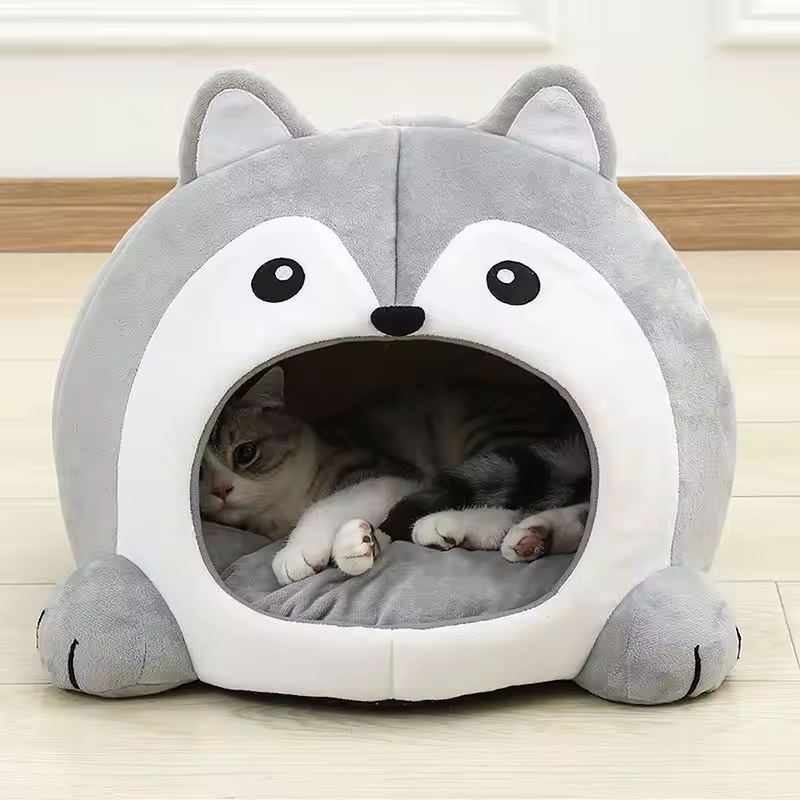
We designed our Four Season Cat Bed with exactly this shift in mind — it’s built to adapt across the year, offering breathable comfort in summer and warmer, cosier support once temperatures drop, so you’re not buying a separate bed for every season. For cats who prefer to hide away and burrow rather than sprawl out, our Smart Cat Cave Bed gives them an enclosed, den-like space that holds warmth naturally, which tends to suit nervous or older cats particularly well during winter months.
If your cat currently sleeps on a flat mat on a wooden or tiled floor, upgrading to a raised or enclosed bed is one of the simplest winter comfort improvements you can make.
-
Smart cat cave bed
Price range: £29.99 through £35.99
Smart pet tech and the rise of AI in cold-weather care
One of the more interesting shifts in pet care over the past couple of years is how much smart technology and AI adoption has crept into everyday products — not just fitness trackers for humans, but genuinely useful tools for pets too. Smart feeders that learn a cat’s eating patterns, activity monitors that flag unusual lethargy (a useful early warning in cold weather), and app-connected toys like our Homefish Smart Cat Toy are becoming far more mainstream in UK households.
This matters for winter care specifically because reduced movement and appetite are two of the first signs a cat is struggling with the cold — and smart, sensor-based products are increasingly good at picking up on pattern changes before an owner would notice them by eye. It’s not a replacement for knowing your cat, but as AI-assisted features become standard rather than novelty, they’re a genuinely helpful extra layer of reassurance during the months when cats are most at risk of quietly going off their food or slowing down.
Don’t forget grooming
It’s tempting to assume grooming is a summer, shedding-season job, but a clean, well-brushed coat insulates far better than one that’s matted or full of loose fur. Regular brushing with a proper grooming glove or electric grooming brush removes trapped debris and loose undercoat, allowing the remaining fur to trap air more effectively — which is exactly what keeps a cat warm in the first place.
A note for owners with outdoor access cats
If your cat has a cat flap or outdoor access, winter needs a bit more thought:
- Check they have a genuine choice to come inside at all times — a frozen or jammed cat flap is a common, avoidable problem
- Consider bringing them in overnight once temperatures regularly drop below freezing, which is standard advice from UK vets and the RSPCA
- Keep an insulated shelter option available if they roam during the day
The bottom line
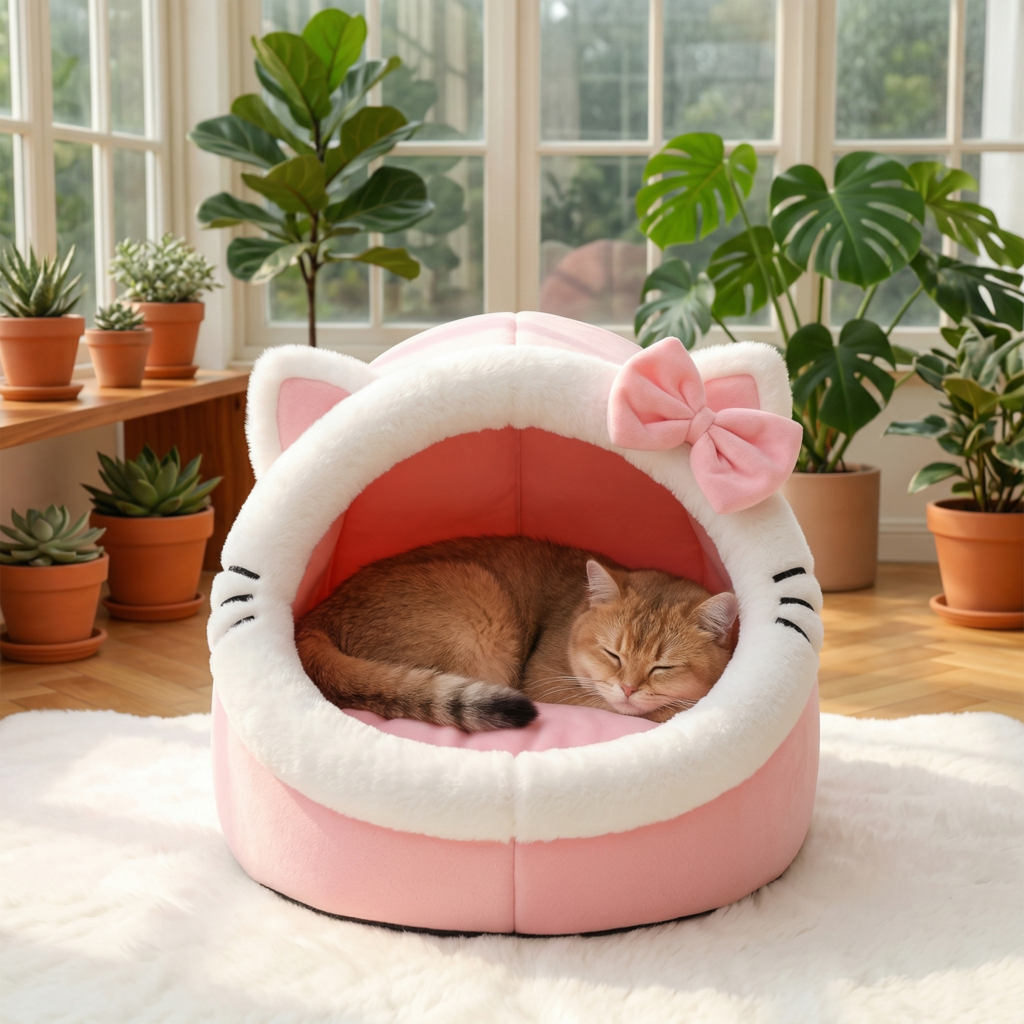
Keeping a cat warm through a UK winter isn’t about drastic changes — it’s about paying attention to where they sleep, what their bed is actually doing for them, and catching the small signs of discomfort early. A properly insulated bed, a bit of extra grooming, and — increasingly — a little help from smart, sensor-based pet tech can make the coldest months a lot more comfortable for your cat.
If you’re shopping for a winter upgrade, our Four Season Cat Bed and Smart Cat Cave Bed are both built with exactly this in mind — browse the full range at Mewvora.