

Most cat toys have a shelf life of about a week. A mouse gets batted under the sofa, a ball loses its jingle, and within a few days it’s just clutter on the floor your cat walks straight past. That’s not a reflection on your cat — it’s what happens with any toy that does the same thing every single time. Cat enrichment has become one of the more talked-about areas of pet care recently, and for good reason: cats that spend long stretches home alone, especially indoor-only cats, need something that actually holds their attention, not just something shaped like prey. Here’s what genuinely works.
What “Interactive cat toys uk” Actually Means
The word gets used loosely, but there are really two different categories worth knowing apart:
Passive toys — a stuffed mouse, a ball, a bit of string — are fine for a burst of play, but cats work them out fast. Once the movement is predictable, the hunting instinct that makes it fun switches off.Pin
Motion-based, prey-mimicking toys move erratically and unpredictably, closer to how an actual insect or rodent behaves. This is what keeps a cat genuinely engaged rather than bored within a day, because the brain doing the chasing can’t fully predict what happens next.
Vertical and scratching enrichment is a separate category again, and it’s not really about “entertainment” at all — it’s a behavioural need. Climbing lets a cat survey territory from height, and scratching is scent-marking and claw maintenance, not misbehaviour. A flat, ground-level toy box doesn’t meet this need no matter how good the toys inside it are.
Most households only really cover the first category. The second two are where the bigger gap tends to be.
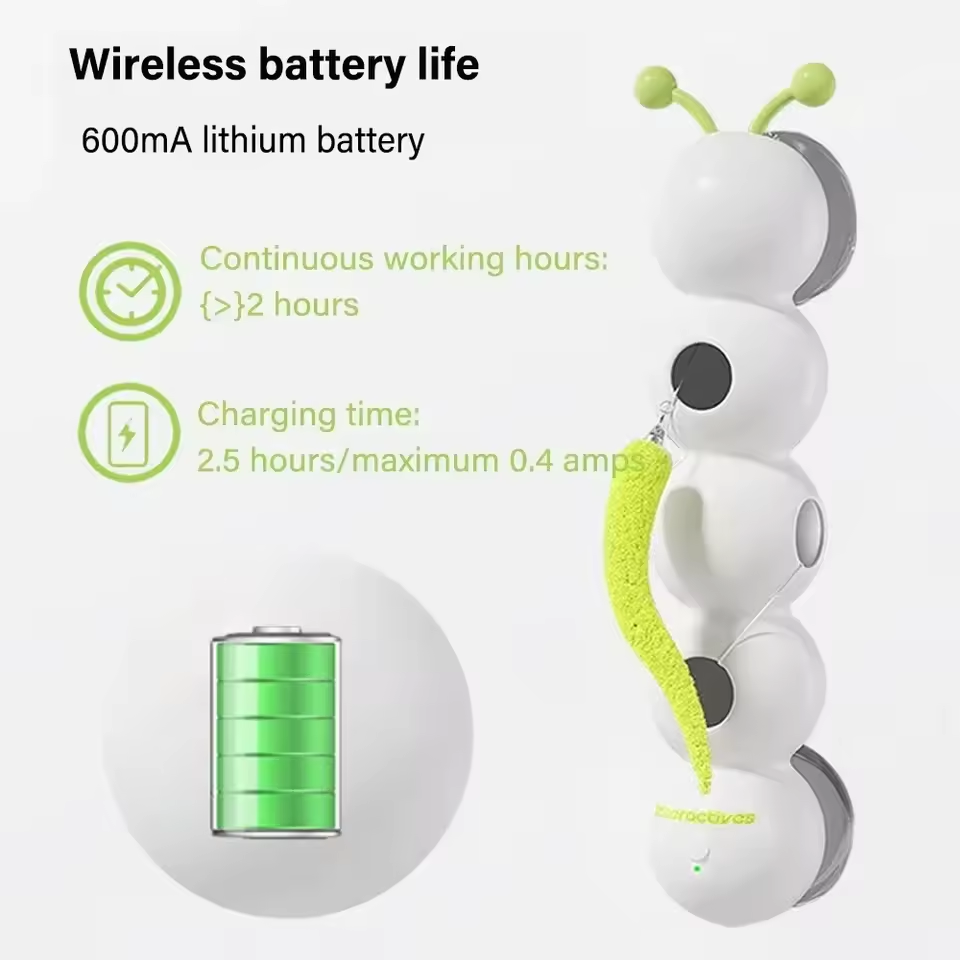
🐛 Homefish Smart Cat Toy with Motion Sensor — £29.99 · Caterpillar-shaped automatic wand toy with infrared motion sensor and an unpredictable spinning feather lure
Which Cats Need This Most
Not every cat needs a drawer full of gadgets, but some genuinely benefit more than others:
- Cats home alone during the working day — the biggest gap in most households, and the one motion-activated toys are specifically built for
- Indoor-only cats — no outdoor hunting outlet means the instinct has nowhere else to go
- Kittens — high energy that needs somewhere to land, ideally away from your ankles at 6am
- Senior cats — gentle, low-impact stimulation helps keep them mentally and physically active without demanding a full sprint
- Multi-cat households — boredom is a common driver of squabbles between cats, and more outlets for play tends to mean less friction
What to Actually Look For
- Unpredictable movement, not repetitive motion — a toy that swings the same arc every time gets solved and ignored within days
- Motion-sensor activation — starts when your cat approaches and stops when they walk away, which keeps the element of surprise and saves the toy from running flat while nobody’s watching
- Rechargeable rather than battery-powered — fewer dead toys at the worst moment, and cheaper to keep running long-term
- Interchangeable lures or attachments — swapping the bit your cat actually catches resets their interest without needing a whole new toy
- Non-toxic materials with no small chewable parts — worth checking, especially for kittens who test everything with their teeth
- A stable base — a toy that slides across the floor when pounced on tends to get abandoned fast, out of frustration rather than disinterest
Climbing and Scratching: The Enrichment Most Homes Skip
Motion toys cover the hunting instinct, but they don’t cover a cat’s need for height and a legitimate place to scratch. Cardboard scratchers shred into a mess within weeks, and rope-wrapped posts unravel with heavy use — which is usually why the sofa ends up as the backup option.
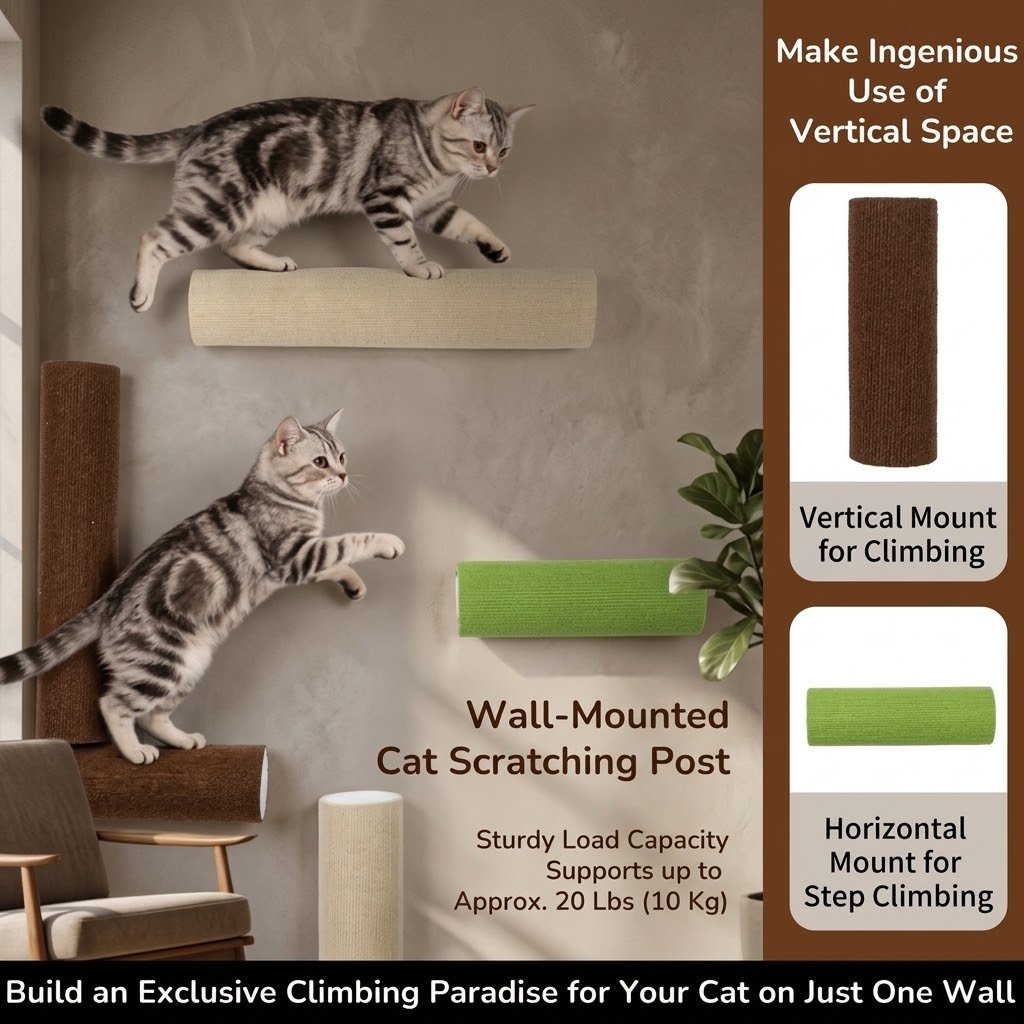
🐾 Cat Climbing Cylinder and Scratcher — £22.99–£29.99 · Tightly woven, lint-free climbing fabric with a self-adhesive backing that lets you combine cylinders into stepping stones or a full climbing pole, in two sizes (30cm and 50cm)
It’s a genuinely different kind of “interactive” — less about a five-minute play burst, and more a permanent fixture your cat uses daily to climb, stretch, and scratch on something that isn’t your furniture.
Where This Gets Practical
Being straightforward rather than just pointing at the nearest product: our Homefish Smart Cat Toy is built specifically around the “unpredictable” problem — the infrared sensor means it only runs when your cat’s actually there, and the spinning feather lure doesn’t move in a pattern a cat can fully learn. It’s rechargeable via USB, comes with two spare feather teasers, and one customer review already sums it up better than we could: their cats “went crazy for it.”
If scratching furniture or a lack of climbing space is the bigger issue in your house, the Cat Climbing Cylinder and Scratcher solves a different problem entirely — and because the sections are expandable, you’re not locked into one fixed layout. Both sit in our full cat product range if you want to compare sizes and colours.
Getting the Most Out of Interactive Play
- Rotate toys rather than leaving everything out permanently — even a good toy gets ignored once it’s just part of the furniture
- Play around dawn and dusk where possible — these tend to be a cat’s naturally more active hunting windows
- Let your cat “catch” something at the end of a session — ending on an actual catch avoids the frustration of a hunt that never resolves, which is standard advice from cat behaviourists
- Don’t leave motion toys running unsupervised for hours — check periodically for wear, especially with kittens who chew
- Position a climbing cylinder near a window or a favourite vantage point — height plus a view tends to get far more use than height alone
A Few Quick Questions
Do cats actually get bored?
Yes. Boredom in cats often shows up as overeating, over-grooming, excess sleeping beyond the usual, or scratching in places you’d rather they didn’t — all fairly common signs that a cat’s daily stimulation isn’t quite meeting their needs.
How long should interactive play sessions be?
Short and frequent tends to work better than one long session — most cats naturally hunt in quick bursts rather than sustained chases, so a few five-to-ten-minute sessions a day usually lands better than one long one.
Is a self-playing toy better than one I control myself?
Both have a place. A motion-activated toy covers the gaps when you’re out or busy; toys you control yourself let you vary the pace and end the session on your cat’s terms, which matters for confidence in more nervous cats.
Do older cats still need interactive toys?
Yes, just gentler ones. Slower-paced, lower-impact play still supports joint mobility and mental engagement in senior cats — it doesn’t need to be as high-energy as kitten play to be worthwhile.
Can a climbing tower actually reduce scratching on furniture?
Often, yes, provided it’s positioned somewhere your cat already spends time and offers the same satisfying grip a sofa arm does. It won’t fix it overnight, but it gives your cat a legitimate alternative rather than just telling them no.
A cat that’s genuinely entertained is usually a calmer, less destructive one — and it’s a fairly small outlay compared to a shredded sofa arm. Have a browse of our full cat and dog range — free UK shipping either way.