

From crate training to landing day — a practical, no-nonsense guide to flying with a dog, wherever in the world you’re headed.
More people are travelling internationally with their dogs than ever, whether that’s a relocation, an extended stay abroad, or just refusing to leave the family dog behind for a two-week holiday. But flying with a dog is genuinely one of the more logistically involved things you can do as a pet owner — the rules vary by airline, by country, and even by breed, and getting it wrong can mean a stressful day for both of you or, in the worst cases, being turned away at check-in.
This guide walks through what flying with a dog actually involves, from months-out prep to the moment you land.
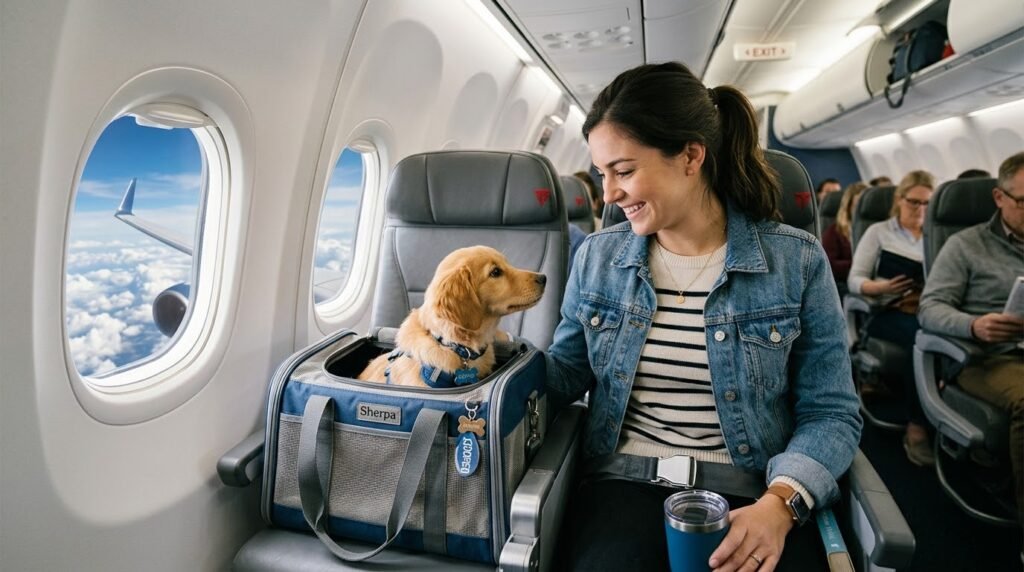
Why Flying With a Dog Takes More Planning Than You’d Expect
Unlike a road trip, flying with a dog isn’t something you can decide to do a week in advance. Airlines require health certificates that are often only valid for a set number of days before travel, many countries have quarantine or import rules for incoming pets, and crate requirements have to meet specific size and ventilation standards depending on whether your dog is travelling in the cabin or in the hold. Start this process early — ideally two to three months out for international trips — because vet appointments, paperwork, and crate training all take longer than people expect.Pin
Flying With a Dog: In-Cabin vs. Cargo vs. Checked Baggage
This is the first thing to sort out, because it shapes almost every other decision.
- In-cabin is generally reserved for smaller dogs who fit in an airline-approved carrier under the seat in front of you. Weight and carrier dimension limits vary a lot between airlines, so always check the specific policy before booking rather than assuming.
- Cargo hold (as manifested cargo) is the option for larger dogs, in a climate-controlled section of the hold. Many airlines restrict or ban flat-faced (brachycephalic) breeds — Bulldogs, Pugs, and similar — from cargo travel altogether, because their airways make them more vulnerable to heat and breathing stress at altitude.
- Checked baggage (as opposed to manifested cargo) is offered by a smaller number of airlines and typically follows similar crate rules to cargo.
Whichever option applies to your dog, flying with a dog always requires an airline-approved, well-ventilated crate that meets IATA sizing standards — enough room for your dog to stand, turn around, and lie down comfortably.
Before the Flight: Getting Your Dog Ready
The single biggest thing you can do to make flying with a dog go smoothly is start crate training well before the actual trip — not the week before. A dog who’s anxious about their crate is going to have a much harder day than one who already sees it as a familiar, comfortable space.
A few things worth doing in the run-up:
- Book the vet visit early. Most airlines and destination countries require a health certificate issued within a specific window before departure — sometimes as little as 10 days — plus proof of vaccinations.
- Practise short stints in the crate at home, gradually building up duration, so the crate itself doesn’t become a source of stress.
- Add something familiar to the crate. A blanket or liner from their regular sleeping spot — even a small offcut from their Donut Dog Bed — carries a scent they already associate with safety, which can genuinely help during a long, unfamiliar journey.
- Talk to your vet about sedation before you consider it. Most vets actively advise against sedating dogs for air travel, since it can affect breathing and blood pressure at altitude. If your dog struggles with anxiety, ask about non-sedating options instead.
Keeping Them Comfortable During and After the Flight
On travel day itself, a few small things make a real difference. Feed a light meal a few hours before rather than right before departure, keep water available up until security, and attach ID tags plus a travel document pouch to the crate with your contact details and the vet’s paperwork.
If you’re flying with a dog into a considerably warmer climate, it’s also worth thinking about the temperature shift on arrival — tarmac waits and warm terminals can catch dogs off guard, especially breeds already prone to overheating. A Dog Cooling Vest is a genuinely practical thing to have ready in your carry-on for exactly that first hour after landing, before you’ve reached air conditioning or shade.

Once you’re through arrivals, give your dog time to decompress before introducing them to a new home, new people, or a new routine all at once. A familiar bed waiting for them at the other end goes a long way toward making a long travel day feel less disorienting.
Final Thoughts
Flying with a dog isn’t complicated once you break it down — health certificate, the right crate, early crate training, and a bit of extra thought for the climate you’re landing in. Start the paperwork early, don’t leave crate training to the last minute, and check your specific airline and destination country’s rules directly, since they genuinely do vary. Mew Vora ships worldwide, so wherever your dog’s travels take you both, the comfort essentials waiting on the other end can be too.
Shop dog beds and travel comfort essentials at mewvora.com/products — quality cat and dog essentials, delivered worldwide.