

Best Cooling Vest for Dogs.
Dogs don’t sweat the way people do. A person walking across hot pavement cools down through sweat glands across most of their skin — a dog has almost none of that, and relies mainly on panting and a small amount of heat loss through the paw pads. That’s a much less efficient system, which is exactly why dogs overheat faster than their owners realize, often while the owner is still perfectly comfortable. A cooling vest is one of the few pieces of gear that actually works with a dog’s biology instead of against it — but only if you understand what it’s doing and what it isn’t.Pin
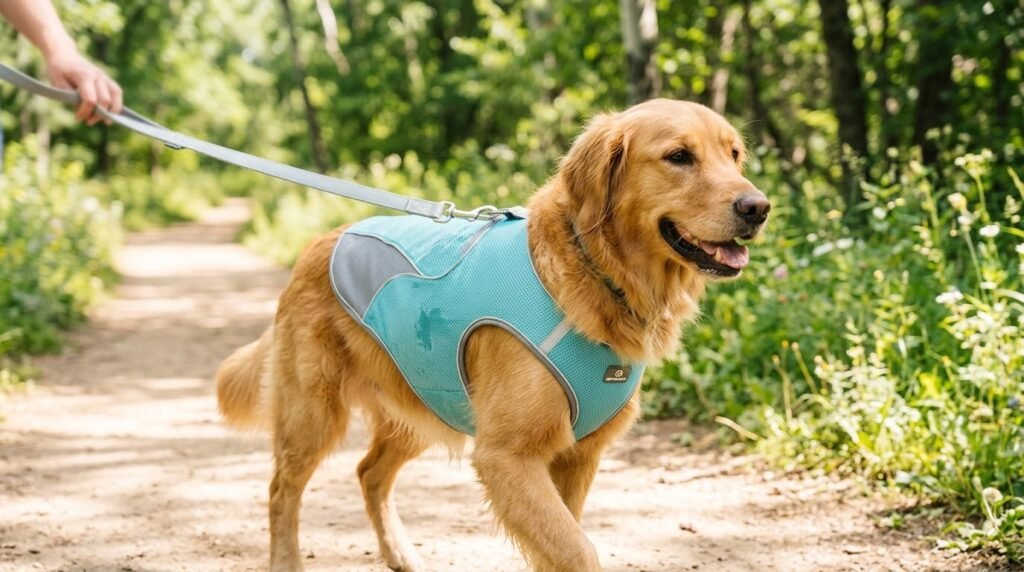
How a Cooling Vest Actually Works
Nearly every dog cooling vest on the market uses evaporative cooling, not refrigeration. You soak the vest in cool water, wring out the excess, and put it on. As the water evaporates off the fabric, it pulls heat away from the dog’s body in the process — the same principle behind why you feel cold stepping out of a swimming pool on a breezy day.
This matters for two practical reasons. First, the vest needs airflow to work well — evaporation slows down in humid, still air, so a cooling vest is more effective in a dry climate or with a breeze than in thick, muggy heat. Second, it isn’t a “set it and forget it” tool. Once the fabric dries out, the cooling effect stops, so vests need re-wetting every couple of hours during real heat, not just once in the morning.
Which Dogs Need One Most
Every dog benefits from help staying cool in hot weather, but some need it more urgently:
- Flat-faced breeds (bulldogs, pugs, boxers) already struggle to pant efficiently, which is their main cooling method — so anything that reduces how hard they need to pant helps.
- Dark-coated and short-coated dogs absorb more heat from direct sun than lighter or double-coated breeds, despite what people often assume about “less fur means cooler.”
- Senior and overweight dogs regulate body temperature less efficiently overall.
- Working and service dogs who don’t get the option to just stop and rest in the shade when they’re hot.
If your dog falls into more than one of these categories, a cooling vest earns its place in the gear drawer well before the hottest day of the year, not after.
What Actually Matters When Choosing One
Skip the marketing copy and check these instead:
- Snug fit against the skin. Evaporative cooling only works where the fabric touches the body, so a loose vest does far less than a properly fitted one.
- Light or reflective outer material. Darker fabric absorbs more heat from the sun, working against the vest’s own cooling effect.
- Breathable mesh, not solid fabric. Airflow speeds up evaporation, which is the entire mechanism the vest depends on.
- Simple, quick-release buckles. A dog that’s already uncomfortable in the heat won’t stay patient through a fiddly harness.
- Machine washable. It’s worn against fur and skin in hot weather — it needs to be cleaned regularly, not just rinsed.
What a Cooling Vest Can’t Replace
This is the part most product pages skip, and it matters more than the vest itself. A cooling vest reduces heat stress — it doesn’t prevent heatstroke on its own. Shade, fresh water, and avoiding the hottest part of the day still do most of the real work. Hot pavement can burn paw pads well before the air temperature feels dangerous to a person standing on two feet, so check the ground with your hand before a walk, not just the weather app.
Know the signs of heatstroke and treat them as urgent: heavy panting that doesn’t ease up, thick drool, wobbly movement, vomiting, or a dog that seems disoriented or collapses. If you see any of that, get your dog into shade and contact a vet immediately — a cooling vest is prevention, not treatment.
A Reusable Option, If You’re Shopping For One
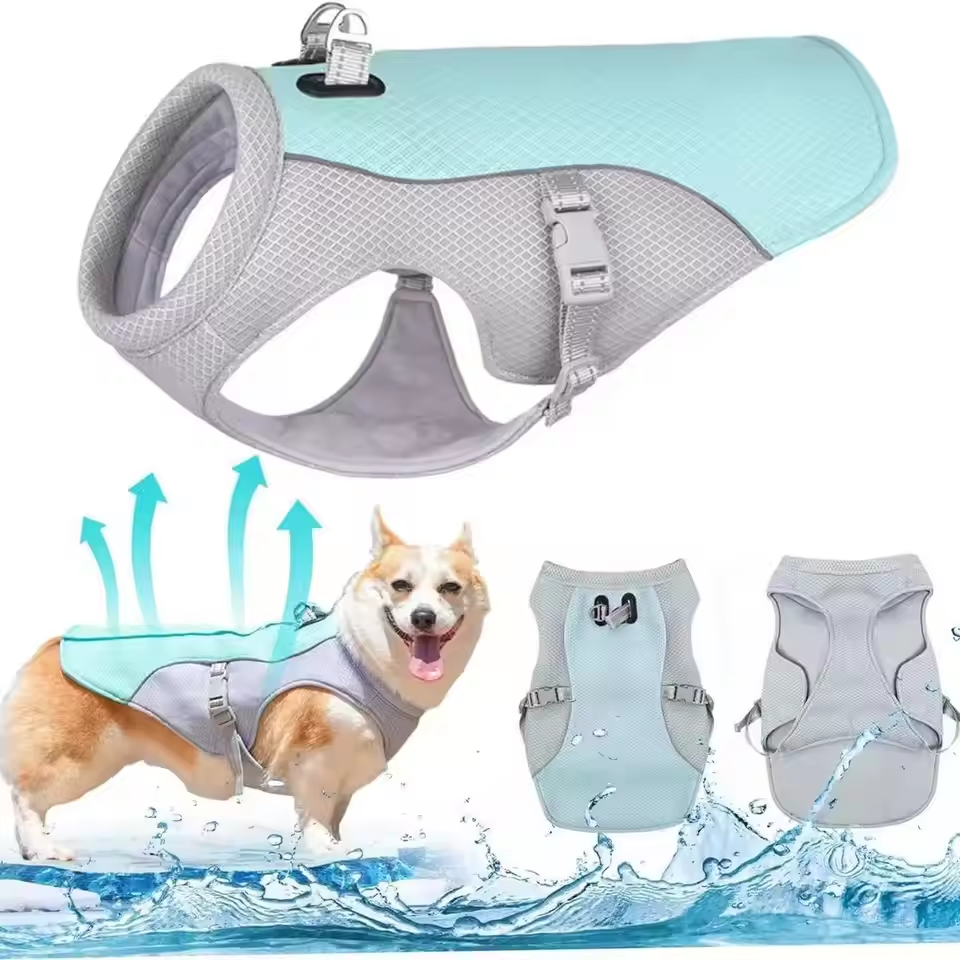
If you’re looking for a cooling vest rather than researching whether to bother with one at all: our Dog Cooling Vest Reflective Mesh Summer Harness (£20.00–£45.00 depending on size) is built as a rewettable evaporative design with a reflective, breathable mesh outer layer — the same features worth checking for on any vest, from any seller.
FAQ
Do cooling vests work in humid weather? Less well than in dry heat, since evaporation slows down when the surrounding air is already saturated with moisture. They still help, just don’t expect the same drop in temperature you’d get in a dry climate.
How often do I need to re-wet it? Roughly every 1–2 hours in real heat, sooner if it’s windy or very dry, since faster evaporation means faster drying.
Can a cooling vest be worn under or over a harness? Most are thin enough to wear under a harness for a walk, though it’s worth checking the specific product’s sizing before assuming it’ll layer well with what you already use.
It’s winter where I live — is any of this relevant right now? If you’re reading this in a Southern Hemisphere summer (roughly December through February), everything above applies exactly the same way — heat stress doesn’t check a calendar, only a thermometer.
Are cooling vests safe for puppies and senior dogs? Generally yes, since there’s no chemical or electrical component involved — just water and evaporation. That said, senior dogs and very young puppies are more heat-sensitive overall, so keep outings shorter regardless of what they’re wearing.
Shop the Swap
The cooling vest above, along with the rest of our range, is priced in GBP and ships direct from our UK store — no currency conversion guesswork, wherever you’re ordering from.
Our Dog Cooling Vest Reflective Mesh Summer Harness (£20.00–£45.00) uses a breathable, reflective mesh built to be re-wetted throughout the day, with a snug fit that keeps it working right where it matters. It’s not a replacement for shade and water on a hot day — but paired with both, it’s one of the easiest ways to keep your dog comfortable when the temperature climbs.