

Separation anxiety in dogs is one of the most misunderstood behavioural issues pet owners deal with, partly because it gets confused with plain boredom or a lack of training. The two look similar from the outside — a chewed-up shoe, a mess by the door — but they come from completely different places, and they need different responses. This guide covers how to actually tell the difference, what tends to cause it, and what genuinely helps, along with when it’s time to bring in a professional rather than trying to manage it alone.
Not every chewed cushion means separation anxiety — but for dogs who genuinely struggle with being left alone, here’s what actually helps.
What Separation Anxiety in Dogs Actually Looks Like
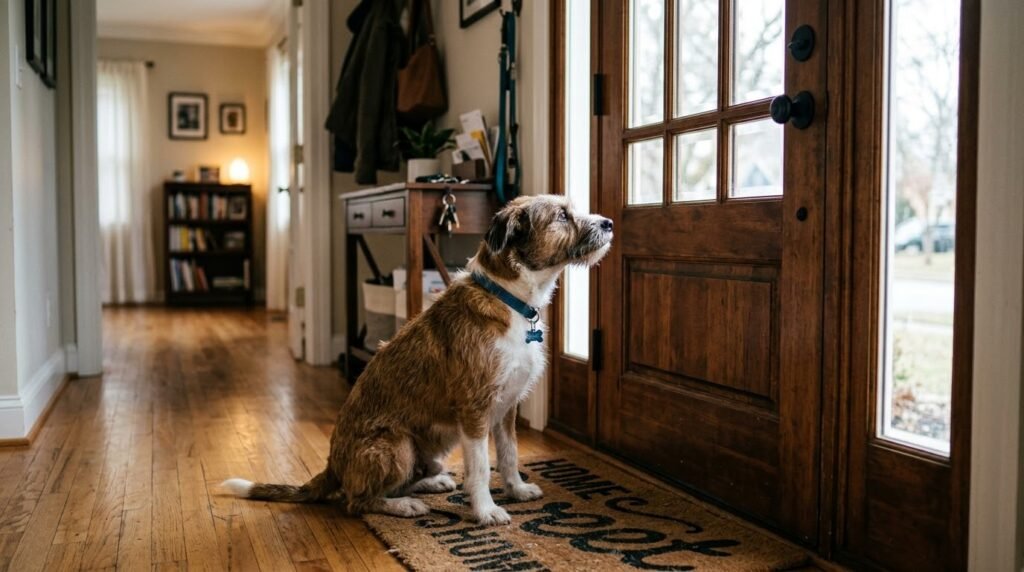
The key difference between separation anxiety in dogs and ordinary boredom-driven mischief is timing and pattern. A bored dog might chew things periodically throughout the day. A dog with genuine separation anxiety tends to show a fairly specific set of behaviours, and almost always concentrated around the moment you leave:Pin
- Destructive behaviour focused specifically around doors, windows, or exit points
- Excessive barking, howling, or whining that starts right after you leave, not randomly through the day
- Pacing, drooling, or panting that isn’t linked to heat or exercise
- Attempts to escape the house or crate, sometimes serious enough to cause injury
- Accidents in the house from dogs who are otherwise fully house-trained
If these behaviours only happen when you’re gone — and your dog is generally fine when you’re home — that pattern is a strong indicator of genuine separation anxiety in dogs rather than a training gap.
What Causes Separation Anxiety in Dogs
There’s rarely a single cause, but a few situations come up again and again. Rescue dogs, especially those with an unknown or difficult history, are more prone to it, likely tied to previous experiences of being abandoned or rehomed. A sudden change in routine — a move, a new work schedule, or a household member who’s suddenly around far less than before — can also trigger it in dogs who previously showed no signs at all. It’s also common in dogs who’ve had an unusually long stretch of near-constant company (extended time off, remote work) that then shifts abruptly back to them being alone for long stretches.
Practical Ways to Ease Separation Anxiety in Dogs
For mild to moderate cases, a handful of consistent habits make a genuine difference over time.
- Keep departures and arrivals low-key. Big, emotional goodbyes and excited hellos actually reinforce the idea that your leaving is a significant event worth being anxious about. Calm, brief, and unremarkable works better.
- Build up alone time gradually. Start with genuinely short absences — a few minutes, then longer — rather than jumping straight to a full working day. This is the single most effective long-term strategy for separation anxiety in dogs, though it takes patience.
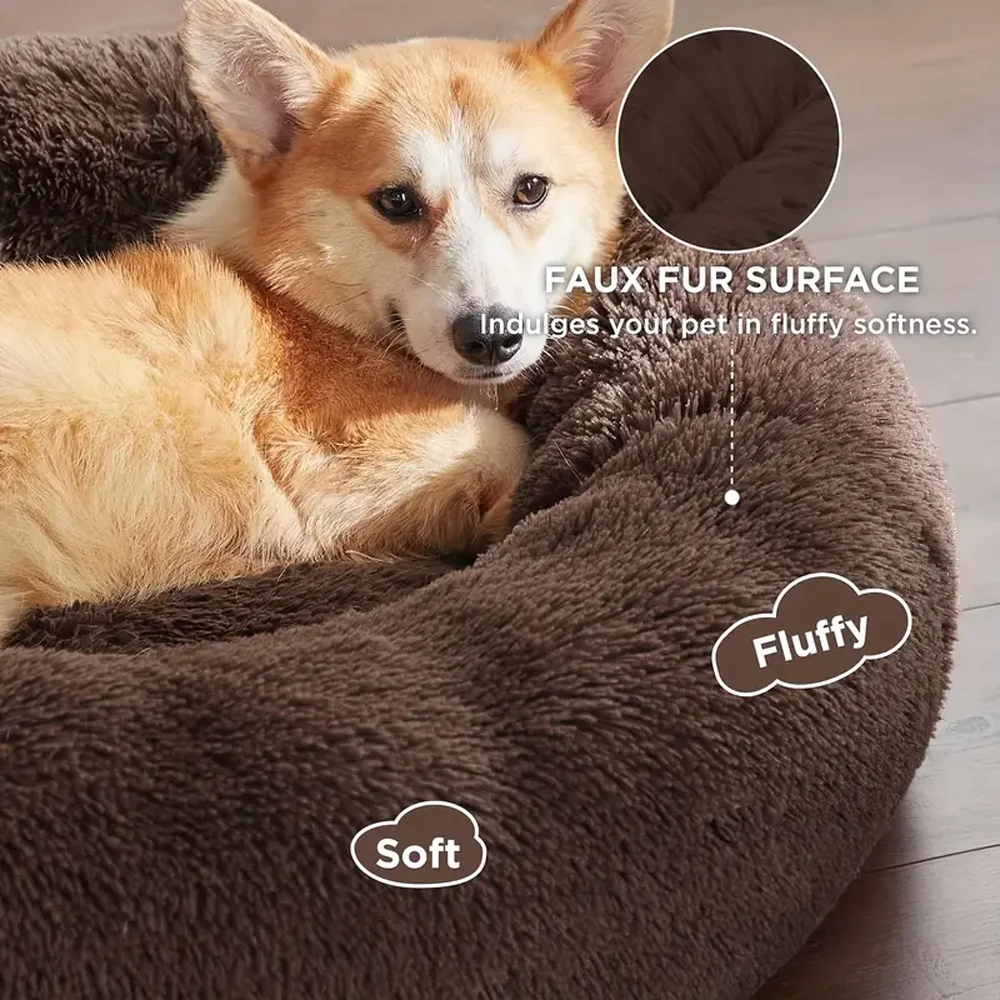
- Give them a consistent, comfortable safe space. A lot of dogs settle faster when they have one dedicated spot that’s always calm and theirs. Our Donut Dog Bed works well for this — the bolstered rim gives anxious dogs something to curl into, which tends to have a genuinely calming effect compared to an open mat.
- Use a calm pre-departure routine. A short, predictable grooming or petting session with something like a 2 Pcs Pet Grooming Gloves can double as a settling ritual before you leave, especially for dogs who respond well to touch.
- Make sure they’re properly exercised beforehand. A dog who’s had a decent walk or play session is generally better equipped to settle down and rest while you’re gone than one who’s full of pent-up energy.
When to Get Professional Help
Here’s the honest part: for moderate to severe separation anxiety in dogs, home strategies alone often aren’t enough, and that’s not a failure on your part. If your dog is self-injuring trying to escape, showing signs of panic (not just mild whining), or the behaviour isn’t improving after a few weeks of consistent gradual training, it’s worth bringing in a certified dog trainer or veterinary behaviourist. In more severe cases, vets sometimes recommend anti-anxiety medication alongside behavioural training — that’s a conversation to have directly with your vet, not something to manage on guesswork.
Final Thoughts
Separation anxiety in dogs is genuinely treatable in most cases, but it takes patience, consistency, and occasionally professional support rather than a single fix. Start with calm departures, gradual alone-time training, and a comfortable safe space, and give it real time before assuming nothing’s working. Mew Vora ships worldwide, so wherever you and your dog are working through this together, the right comfort essentials can reach you.
Shop dog beds and comfort essentials at mewvora.com/products — quality cat and dog essentials, delivered worldwide.
This article is intended as general guidance and isn’t a substitute for advice from a vet or certified dog behaviourist, especially for moderate to severe cases.