

Cats are famous for hiding pain, and that instinct doesn’t disappear with age — it just makes senior cat care far easier to overlook than senior dog care. A cat that’s slowing down, sleeping more, or grooming less doesn’t announce it the way a limping dog does. By the time most owners notice something’s changed, their cat has often been quietly adjusting to discomfort for months, well before anyone thinks to make a change as simple as swapping in a Smart Cat Cave Bed.
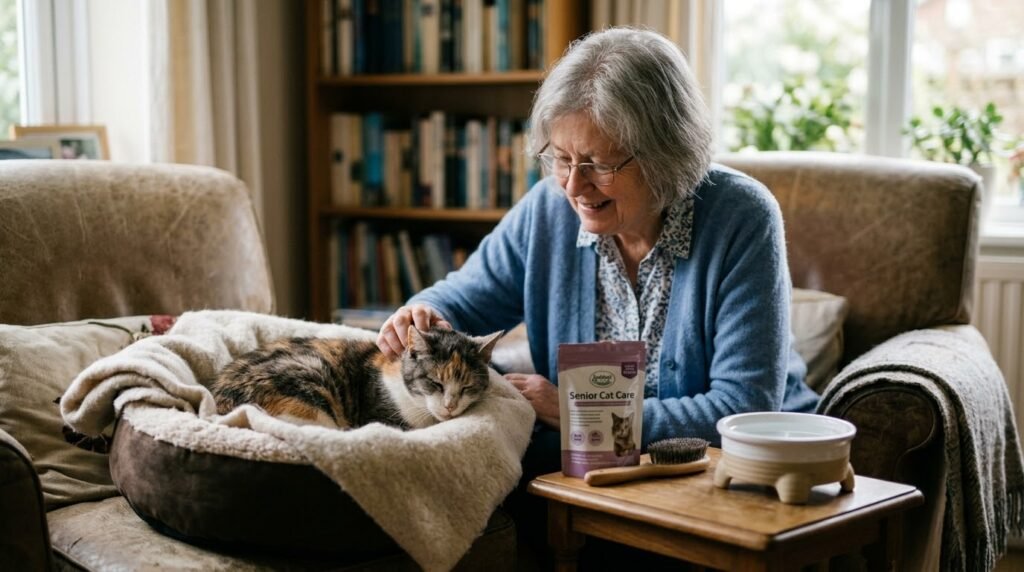
The Mistake Most Owners Make: Assuming No Symptoms Means No Problem
The biggest gap in senior cat care isn’t lack of concern — it’s timing. Cats are wired to mask weakness, a leftover survival instinct from being both predator and prey in the wild. That means the usual signals owners wait for — limping, crying out, obvious distress — often never show up, even when a cat is dealing with arthritis, dental pain, or early kidney disease. Waiting for obvious symptoms before adjusting senior cat care routines means you’re usually already behind. Small, proactive changes — like giving an older cat easier access to a Smart Cat Cave Bed instead of their old elevated perch — tend to matter more than people expect, long before any obvious symptom shows up.Pin
What Actually Changes as Cats Age
A few things shift quietly, often well before any dramatic sign appears:
- Joints stiffen. Feline arthritis is common in cats over 10, though it’s easy to miss because cats compensate by jumping less rather than limping.
- Grooming drops off. Stiffness and reduced flexibility make it harder for older cats to reach and groom themselves, which shows up as matting, especially around the hips and lower back.
- Kidney function can decline. This is one of the more common senior cat health issues, and early signs — drinking more, subtle weight loss — are easy to overlook.
- Senses dull. Reduced hearing and vision change how confident a cat is moving around a home, especially in the dark or on unfamiliar surfaces.
- They seek out safer, lower-effort resting spots. A cat who used to sleep on top of the wardrobe may quietly start choosing the floor instead — exactly the gap a low-entry option like the Smart Cat Cave Bed is designed to fill.
Senior Cat Care Essentials: What Actually Helps
A few adjustments make a real, daily difference:
Twice-yearly vet checkups. Senior cats benefit from more frequent checkups than younger cats, since early bloodwork can catch kidney or thyroid changes long before symptoms appear.
Low-effort access to essentials. Litter boxes with low sides, food and water bowls that don’t require jumping, and resting spots placed low to the ground all reduce the physical strain an older cat faces every day.
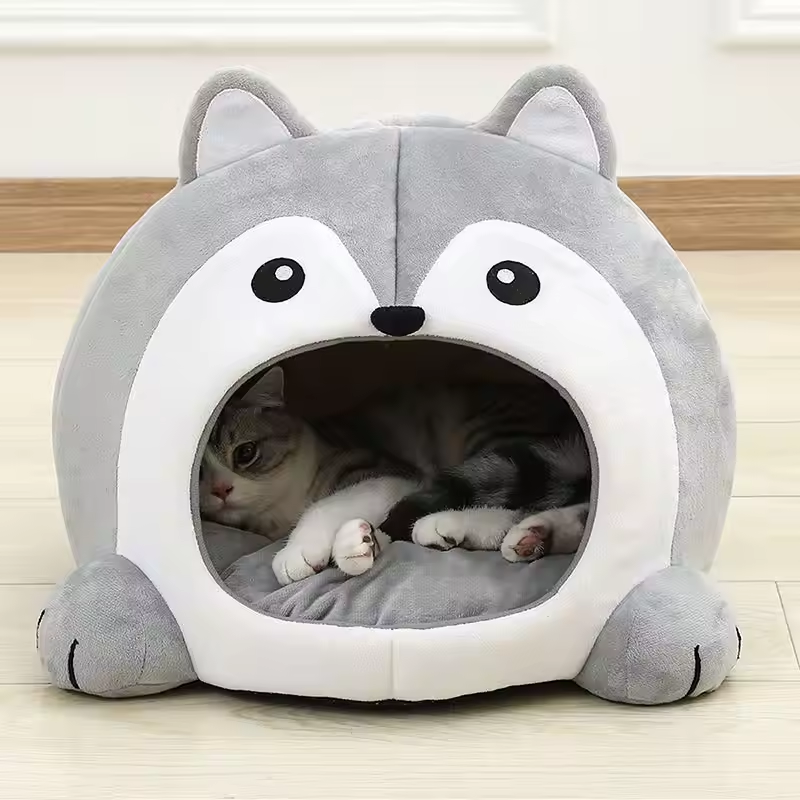
Supportive bedding placed where they already rest. A soft, enclosed bed makes a bigger difference to comfort than most owners expect — our own Smart Cat Cave Bed works well here, giving an aging cat a warm, low-effort spot to retreat into without needing to jump or climb to reach it.
Gentle grooming support. Since many senior cats can’t groom as thoroughly as they used to, a soft grooming glove a few times a week helps prevent matting without the stress of a full brushing session.
Diet adjustments. Senior-specific food, and sometimes smaller, more frequent meals, supports cats dealing with dental discomfort or reduced appetite.
Signs Your Cat Needs More Senior Cat Care Support
- Noticeably less jumping onto furniture or counters they used to use easily
- Matted fur, especially around the back and hips
- Weight loss despite a normal or increased appetite
- Hiding more than usual, or avoiding areas they used to frequent
- Missing the litter box, which is often about access rather than behavior
If several of these sound familiar, it’s less about one product fixing everything and more about making daily life easier — starting with something like a Smart Cat Cave Bed as a low-effort place to rest.
A Comfort Upgrade Worth Making
This is where senior cat care tends to come down to a few genuinely useful changes rather than a long list of products. Our Smart Cat Cave Bed is one of the simplest — its enclosed, low-entry design means an arthritic or less mobile cat doesn’t have to climb or jump to reach a warm, secure spot, and the enclosed shape gives them the same sense of safety a cat instinctively looks for as they get older and more cautious. It’s a small change that fits naturally into daily senior cat care without asking anything extra of your cat.
Making Daily Life Easier
A few more habits worth building into ongoing senior cat care:
- Keep resources — food, water, litter, and a bed like the Smart Cat Cave Bed — on one level of the house if your cat has started avoiding stairs
- Brush gently a few times a week rather than waiting for mats to form
- Keep a consistent routine, since older cats generally cope better with predictability than change
- Watch weight and appetite month to month rather than only at vet visits
The Bottom Line
Senior cat care is less about big interventions and more about noticing the quiet signs before they become real problems — a cat sleeping lower to the ground, grooming a little less, moving a little more carefully. A few adjustments, like giving them an easy, enclosed spot such as our Smart Cat Cave Bed to retreat into, go a long way toward keeping an aging cat genuinely comfortable, wherever in the world they’re getting older.