

You bought a cat scratching post, set it up in the corner, and your cat still went straight for the sofa arm. It’s one of the most common complaints cat owners have, and it’s almost never because the cat is being difficult. It’s because the scratcher itself — its material, height, stability, or placement — doesn’t match what that particular cat actually wants from scratching in the first place.
The Mistake Most Owners Make: Buying Any Scratcher and Hoping for the Best
Most people pick a scratcher based on what looks nice or what’s cheapest, plant it somewhere out of the way, and assume the cat will find it and use it. Cats don’t work that way. Scratching is a specific, purposeful behavior, and if the post doesn’t meet a cat’s preferences for material, height, and location, they’ll simply keep using the furniture that already does.Pin
Why Cats Scratch in the First Place
Scratching isn’t destructive behavior — it’s a normal, necessary one. Understanding why makes it much easier to redirect:
- Claw maintenance. Scratching removes the worn outer sheath of the claw, keeping it sharp and healthy.
- Stretching. Cats use scratching to stretch their back, shoulders, and legs, especially first thing after waking up.
- Scent marking. Cats have scent glands in their paws, so scratching leaves a mark that’s part visual, part chemical — a way of claiming territory.
- Stress relief. Scratching can be a self-soothing behavior during moments of excitement or mild stress.
None of that goes away by buying a scratcher — it only stops targeting your furniture if the scratcher genuinely meets the same needs.
How to Choose a Cat Scratching Post Your Cat Will Actually Use
A few concrete things make the difference between a scratcher that gets used daily and one that gets ignored:
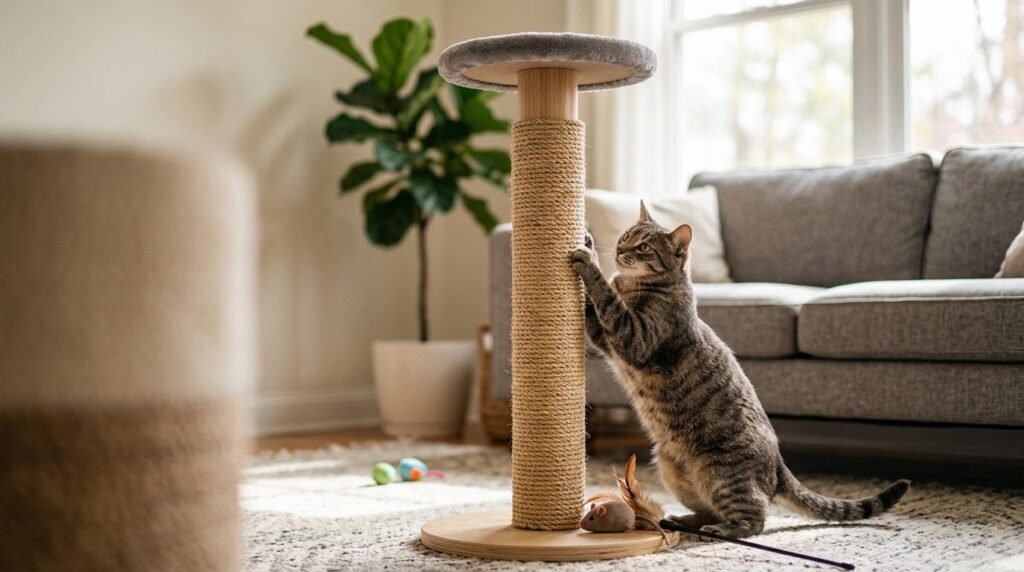
Height and stability. Cats like to stretch fully upward while scratching, so look for a post at least 3 feet tall with a wide, sturdy base. A wobbly post gets abandoned fast.
Material. Sisal rope or sisal fabric is the most reliably popular material, though some cats prefer cardboard or plain wood. If your cat already has a habit of scratching a specific surface — carpet, upholstery, a wooden door frame — matching that texture is the fastest way to redirect them.
Orientation. Watch where your cat currently scratches. Vertical surfaces (furniture arms, door frames) mean a vertical post is the better match. Horizontal surfaces (rugs, carpet) mean a flat or angled scratcher will get more use.
Placement. This is the detail most owners get backwards. A scratcher tucked away in an unused room won’t get used, no matter how good it is. Start by placing it right next to whatever your cat is currently scratching, then gradually move it to a more convenient spot once the habit sticks.
Signs Your Cat’s Current Scratcher Isn’t Working
- Furniture, carpet, or door frames still show fresh scratch marks despite having a scratcher
- The scratcher itself shows little to no wear after weeks of use
- Your cat avoids the area where the scratcher is placed
- The post wobbles, tips, or has come loose from its base
Any of these usually point to a mismatch in material, height, or location rather than a cat that “just won’t use one.”
A Scratcher Worth Bringing Home
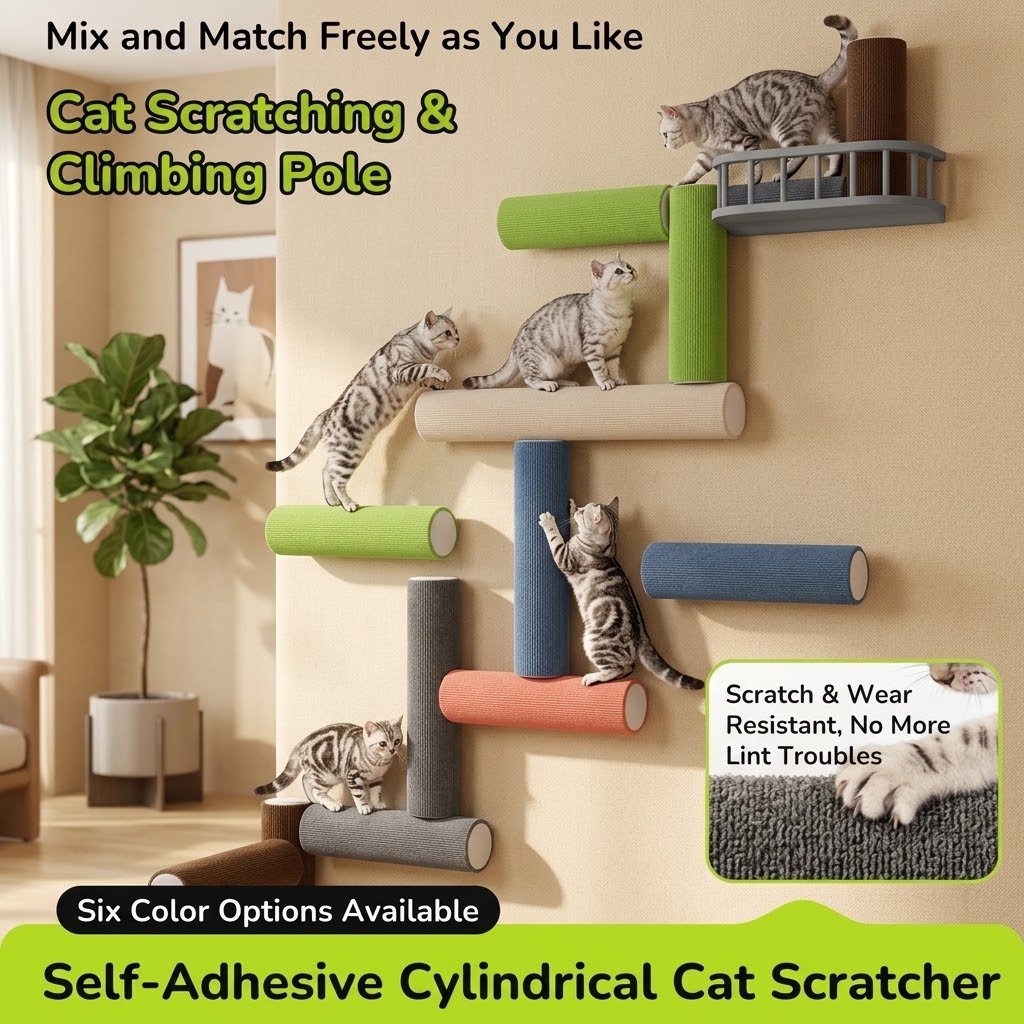
Our Cat Climbing Cylinder and Scratcher was designed around the two things cats actually look for: a sturdy, upright surface for a full-body stretch, and a durable texture that holds up to daily use without shredding apart in a week. It works well as a first scratcher for redirecting furniture habits, or as an addition for cats who scratch in more than one spot around the house. We ship it worldwide, with a 15-day return policy if it isn’t the right match for your cat.
Redirecting the Habit
If your cat already has an established habit of scratching furniture, a few things help speed up the switch:
- Place the new scratcher directly next to the furniture they’re currently targeting, not across the room
- Use catnip or a few treats near the scratcher in the first week to build a positive association
- Reward your cat when you catch them using it, rather than only reacting when they scratch something else
- Never punish scratching directed at furniture — it usually just adds stress, which can make scratching worse
- Trim nails regularly to reduce the damage in the meantime while the new habit builds
The Bottom Line
A cat scratching post only works if it actually matches what your cat is looking for — the right height, the right material, and the right spot in the house. Get those three things right, and most cats redirect away from furniture within a couple of weeks, no matter where in the world you and your cat happen to be.
Buy cat scratching post now on mewvora.com.