

Somewhere between the vet appointment, the flea treatment, and the four different foods you’re still trying to figure out, someone hands you a shopping list that says “bed” like it’s the easy item. It isn’t. Your puppy’s first bed is one of the only purchases that actually changes how quickly they settle in, how well they sleep through the night, and whether the next few months involve replacing a chewed-up cushion every other week.
Get it right early and you save yourself money, mess, and a fair number of 3am whimpers — theirs, mostly, though possibly yours too.pin
Why the First Bed Matters More Than It Looks Like It Should
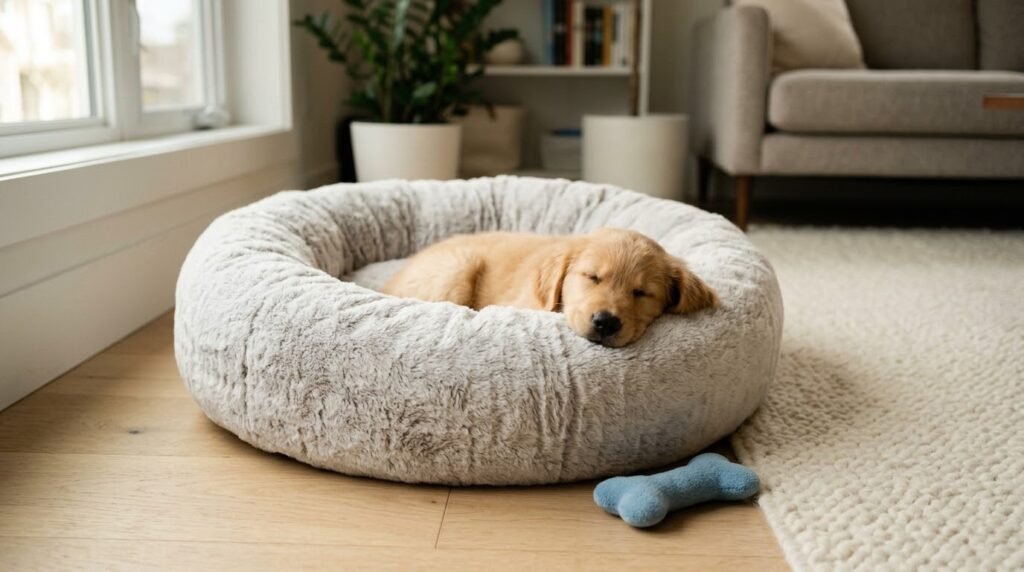
Everything about a new home is unfamiliar to a puppy. Different smells, different floors, different sounds at night. A bed is the one spot that stays exactly the same every single day — same texture, same corner, same faint smell of them once they’ve slept in it a few times. That consistency does a lot of quiet work. Puppies who have one reliable, comfortable spot tend to settle faster and cry less overnight than puppies shuffled between a cold floor, a sofa, and whatever blanket happened to be nearby.
It’s not really about comfort in the human sense. It’s about giving a very young animal one predictable thing in a world that currently makes no sense to them.
The Mistake Almost Every New Owner Makes
Here’s the one we see constantly: buying a bed sized for the dog your puppy is going to be, not the one they are right now.
The logic makes sense on paper — why buy twice? But a tiny puppy dropped into a bed built for a fully grown Labrador doesn’t feel cosy, it feels exposed. Puppies are den animals by instinct. They want to curl up somewhere that has an edge to back into, not sprawl in the middle of an empty plain of fabric. An oversized bed too early often gets ignored completely in favour of a shoe, a laundry pile, or the gap behind the sofa — anywhere that feels smaller and safer.
The other repeat offenders: beds with no removable cover (accidents are not a maybe, they’re a when), stuffing that isn’t chew-safe for a teething mouth, and beds bought purely because they looked good in a photo rather than because they suited the actual puppy.
Choosing a Puppy Bed: What Actually Matters
If you strip away the marketing, a good first bed really only needs to do four things well.
Size relative to right now, not year one. A bed your puppy can properly curl into — with their back or side touching an edge — reads as secure. If you’ve got a breed that’s going to grow significantly, plan on sizing up once or twice rather than buying “future-proof” from day one.
A washable, removable cover. Non-negotiable. Toilet training accidents, muddy paws, the occasional stomach upset — all of it happens on the bed at some point, and a cover you can just unzip and throw in the wash is the difference between a bed that lasts and one you’re replacing by month three.
A shape that mimics a den. Round or oval beds with a slightly raised, bolstered edge tend to get used far more than flat cushions, especially in the first few months. That raised rim gives a puppy something to lean into, which matters more than it sounds like it would.
Chew-resistant, non-toxic materials. Teething doesn’t wait for a convenient time. A bed that survives some exploratory nibbling — without shredding into swallowable stuffing — is worth paying slightly more for upfront.
Puppy’s First Bed size Guide
Small breeds (think Chihuahuas, Dachshunds, Pomeranians) can often go straight into close to their adult-size bed without much waste, since the growth curve is short and modest. Medium breeds usually need one size-up somewhere around the four-to-six-month mark. Large and giant breed puppies — Labradors, German Shepherds, anything that’s going to be 30kg-plus as an adult — will typically need two bed changes in the first year, because a bed sized correctly for a 10-week-old pup will be laughably small by month seven.
If you’re not sure which camp your puppy falls into, sizing slightly smaller than “just in case” and upgrading once is usually the better call than starting too big.
Crate, Bed, or Both?
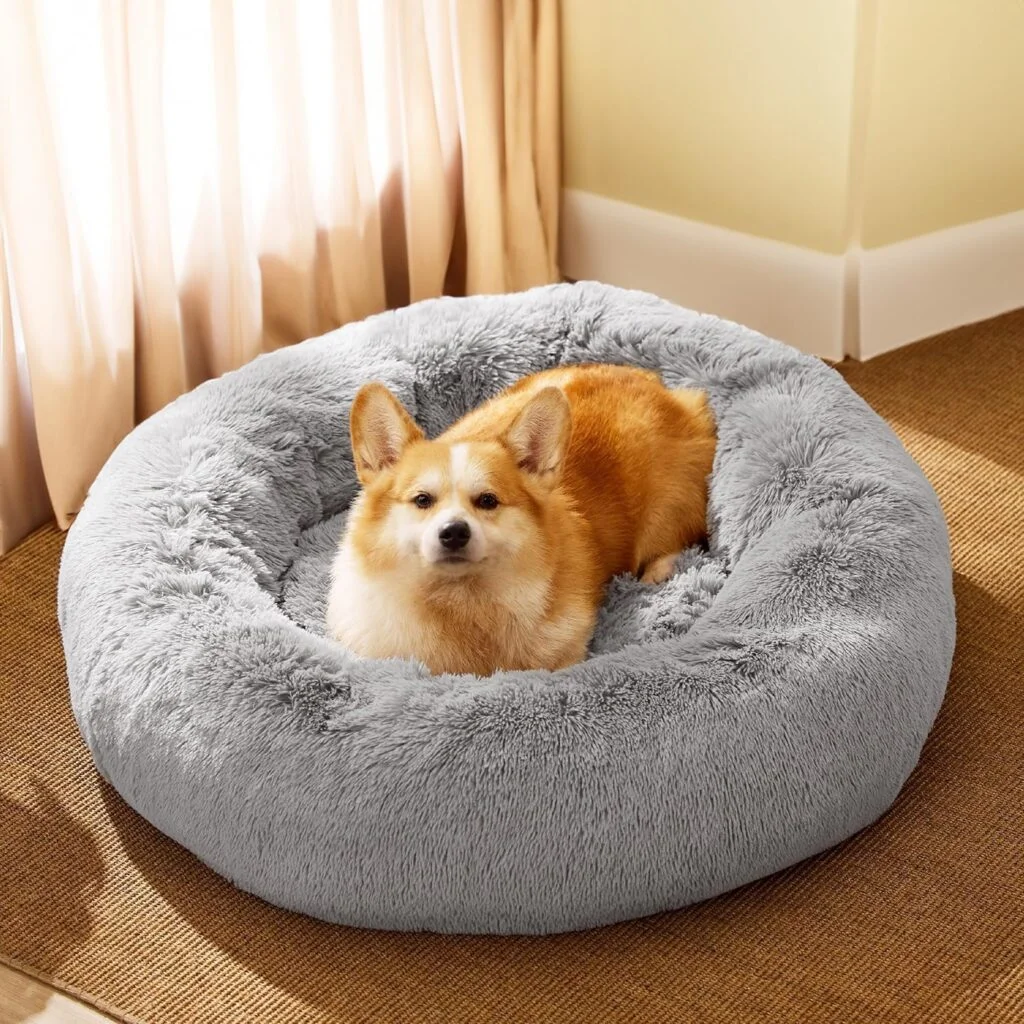
This trips a lot of new owners up, so worth answering directly: a bed and a crate aren’t competing purchases, they solve different problems. A crate is a training and safety tool — somewhere contained for sleep training, travel, or the moments you can’t supervise. A bed is a comfort space that can live inside the crate, next to it, or in a separate spot in the house once your puppy has more freedom to roam. Most households end up using both, often with the same soft bed simply moved between the two locations as routines change.
Getting Your Puppy to Actually Use It
Buying the right bed is half the job — puppies don’t automatically know a bed is “theirs” just because it’s there. A few things genuinely help: place it somewhere near the family initially, not off in an isolated room, since very young puppies don’t do well sleeping completely alone yet. Rubbing a worn t-shirt with your scent on it into the bed for the first few nights speeds up the “this is safe” association. And keep the bed in the same spot once you’ve chosen one — puppies build routine fast, and moving the bed around resets that progress every time.
What We’d Actually Recommend
This is more or less the exact brief our Donut Dog Bed was built around — round shape, bolstered sides for that curled-up, secure feeling, soft plush fabric, and a fully removable, machine-washable cover for the accidents that are genuinely just part of raising a puppy. It comes in multiple sizes, so if you’re working with a breed that’s going to grow substantially, sizing up later is a straightforward swap rather than starting the search over.
We ship worldwide, not just within one country, so wherever you’re bringing your new puppy home, getting the right first bed isn’t limited by location.
You can take a look at the Donut Dog Bed here.
Quick Answers
What size bed does a puppy need? One they can comfortably curl into with their back or side against an edge — not one sized for their adult weight. Plan to size up as they grow rather than starting oversized.
When should I buy my puppy’s first bed? Before they come home, ideally. Having a consistent, familiar spot ready from day one helps with settling in and reduces the first-night crying that catches a lot of new owners off guard.
Should the bed go inside the crate? It can, especially early on. Many owners start with the bed inside the crate for sleep training, then give the puppy a second bed elsewhere in the house once they’re trusted with more freedom to roam.
Choosing your puppy’s first bed doesn’t need to be complicated, but it’s worth more thought than it usually gets. Get the size, material, and shape right, and you’re not just buying somewhere to sleep — you’re giving your puppy the first genuinely secure spot in their new home.