

If your cat’s taken to hiding under the bed more than usual, or seems jumpy at sounds she used to ignore, most owners’ first instinct is to give her more attention — more fuss, more time on the lap, more encouragement to come out. It’s well-meaning, and it’s often exactly the wrong move. What an anxious cat usually wants isn’t more contact, it’s somewhere she can disappear from view entirely. That’s the whole idea behind a calming cat bed for anxiety, and it’s a big part of why our Smart Cat Cave Bed tends to change things faster than extra affection ever does.
It sounds almost too simple to be a real fix. But feeling exposed is one of the biggest, most consistent stressors for cats, and giving that need somewhere proper to go often does more than any amount of coaxing.Pin
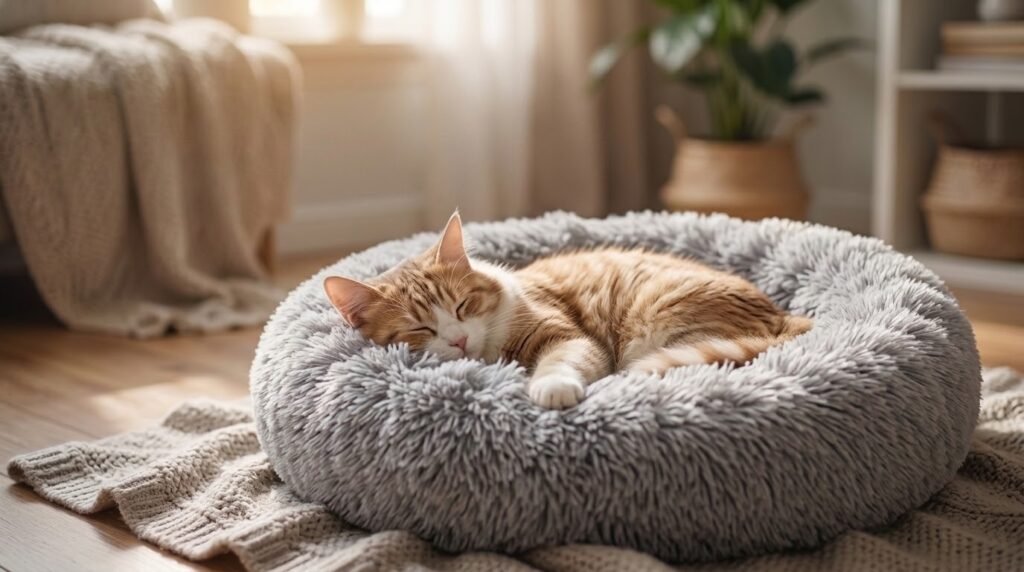
Why a Calming Cat Bed for Anxiety Actually Works
Cats are both predator and prey in the wild, and a huge part of feline instinct is built around not being seen when they don’t want to be. An open cushion in the middle of a busy room doesn’t offer that. It’s comfortable, but it’s fully exposed — which for a cat already on edge can feel like the opposite of safe, no matter how soft it is.
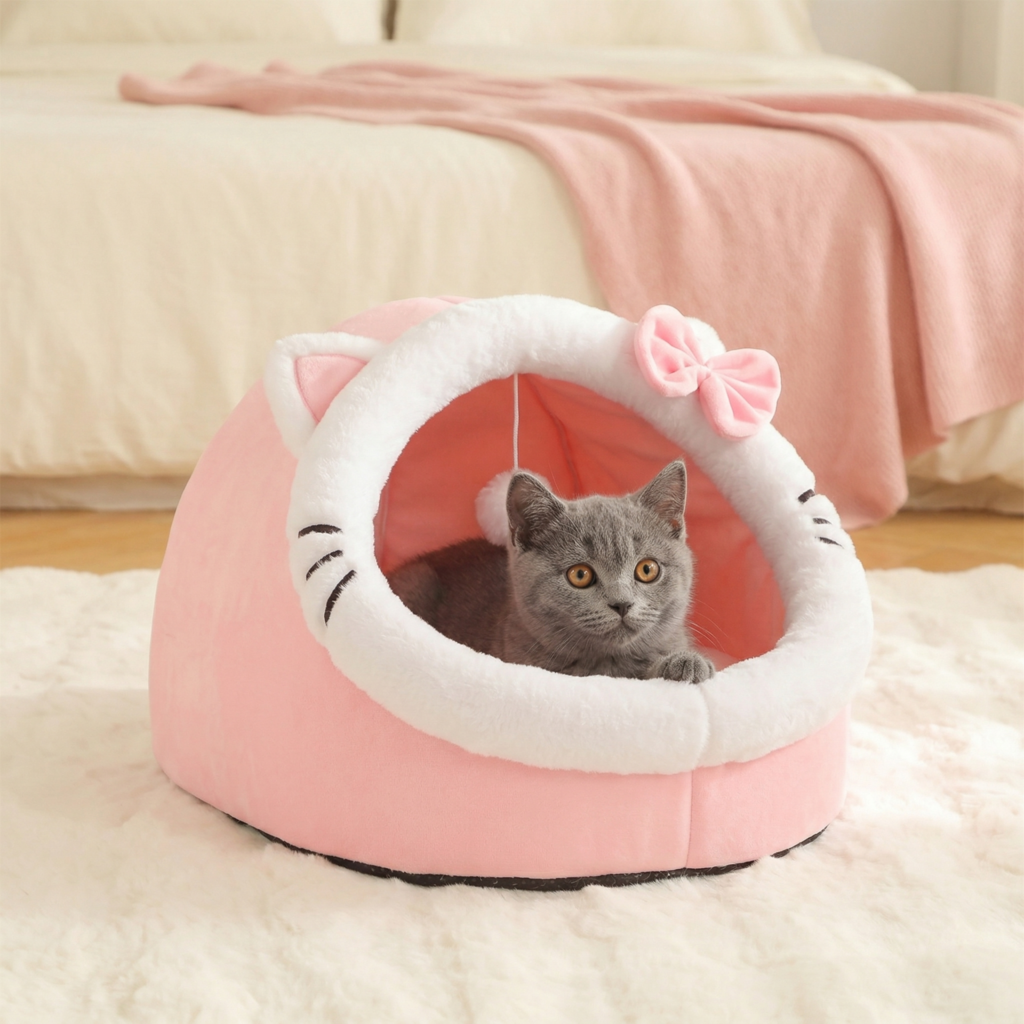
An enclosed, den-style bed solves that directly. Being able to tuck herself somewhere hidden, with walls on most sides and only one way in or out, taps into an instinct that’s older than domestication itself. It’s the same reason shelter cats given a simple hiding box settle noticeably faster than those without one — visibility, not comfort, is usually the bigger stressor.
Signs Your Cat Might Need a Calming Bed
Stress in cats doesn’t always look dramatic. A few of the more common signs worth watching for:
- Hiding more than usual, especially in new or unfamiliar spots
- Over-grooming, sometimes to the point of bald or thinning patches
- Reduced appetite or skipping meals
- Increased vocalising, or the opposite — going unusually quiet
- Avoiding the litter tray, or accidents outside it
- Flinching or startling at sounds that didn’t used to bother her
A single one of these on an off day usually isn’t cause for concern. A pattern building up over more than a week or two is worth taking seriously — and worth reading as your cat trying to tell you something about her environment.
What Makes a Cat Bed Actually Calming (Not Just Cosy)
Plenty of beds are marketed as calming without doing much to actually earn that label. A few things genuinely matter:
- A proper enclosed shape, not just raised sides. A true den or cave design gives real cover, not just a slightly deeper cushion.
- The right size. Too large and it stops feeling protective; too small and she won’t settle in it at all. Most cats want to fit snugly, almost curled against the walls.
- A single, clear entrance, rather than an open-plan design she can be approached from multiple angles.
- Placement away from noise and foot traffic. Even the best bed won’t help much stuck in the middle of a busy hallway.
- Washable material. Anxious cats often use a calming bed heavily once they take to it, so it needs to hold up to regular cleaning.
Our Pick: The Mew Vora Smart Cat Cave Bed
Our Smart Cat Cave Bed is built around that enclosed, single-entrance design rather than the open-cushion style most standard beds use. It gives a cat a genuine place to retreat to and feel unseen, which is usually the missing piece for a cat who’s been avoiding her existing bed in favour of behind the sofa or under the bed frame.
Placement matters as much as the bed itself — put it somewhere quiet, away from the front door or a busy kitchen, and resist the urge to check on her constantly once she’s in it. Part of what makes it work is being left alone.
Building a Calmer Environment Beyond the Bed
A calming bed does a lot on its own, but it works even better alongside a few other changes:
- Vertical space gives an anxious cat somewhere to observe from a distance rather than staying at floor level, where everything feels closer and more threatening. Our Cat Climbing Cylinder and Scratcher works well for this, especially placed somewhere she can see the room without being in the middle of it.
- Predictable play helps burn off nervous energy in a controlled way. Our Homefish Smart Cat Toy with Motion Sensor gives her something to focus on that isn’t just watching the room for the next disturbance.
- Routine matters more than most owners expect — consistent feeding times and a settled daily rhythm genuinely reduce baseline stress in most cats.
When to See a Vet About Cat Anxiety
A calming bed and a quieter environment help with everyday stress, but they’re not a substitute for veterinary advice when something more serious is going on. Get your cat checked if you notice:
- Sudden, sharp changes in behaviour with no obvious trigger
- Not eating for more than 24 hours
- Over-grooming severe enough to cause bald patches or skin irritation
- Ongoing litter tray avoidance, which can also point to a medical issue rather than a purely behavioural one
- Any signs of pain alongside the stress — reduced mobility, hiding combined with reluctance to be touched
Anxiety can sometimes be a symptom of an underlying medical issue rather than a purely environmental one, so it’s always worth ruling that out first if the signs are severe or came on quickly.
FAQ: Calming Cat Bed for Anxiety
How long does it take a cat to start using a calming bed? It varies a lot by cat. Some settle in within a day; others take a couple of weeks, especially if they’re naturally cautious of new objects. Leaving it in a quiet, low-traffic spot from day one helps speed that up.
Will a calming bed help with separation anxiety specifically? It can help as one part of the picture, giving her a secure base while you’re out, but separation anxiety that’s severe or persistent usually needs a broader approach, and sometimes a vet’s input, alongside the bed itself.
Should I place a calming bed near the litter tray or food? No — cats generally prefer distance between where they rest, where they eat, and where they toilet. Keep the calming bed in its own quiet spot away from both.
Can kittens use a calming cat bed, or is it just for stressed adult cats? Kittens benefit from them too, particularly in the first few weeks in a new home when everything is unfamiliar. It’s often one of the more reassuring things you can offer during that settling-in period.
The Bottom Line
A calming cat bed for anxiety isn’t a gimmick — it’s built around one of the most basic things a stressed cat needs, which is somewhere to not be seen for a while. Our Smart Cat Cave Bed is designed for exactly that, and pairing it with some vertical space and a steady routine covers most of what an anxious cat is actually asking for.
Browse the full range of cat products at Mew Vora, or get in touch via our contact page if you’re not sure what’s right for your cat’s situation.