

If your sofa arm looks like it lost a fight, or your cat has claimed the top of the fridge as her personal penthouse, the problem usually isn’t your cat — it’s a lack of proper indoor cat furniture. We see the same story on repeat at Mew Vora: a home without a dedicated climbing and scratching piece, like our Cat Climbing Cylinder and Scratcher, ends up with a cat who improvises with whatever’s tallest, softest, or most expensive in the room instead.
It’s an easy mistake to make. A litter tray, a bowl, and a bed feel like the essentials, and everything else can seem like an add-on. But for a cat who spends her whole life indoors, furniture isn’t decoration — it’s the only outlet she has for instincts that would otherwise be worked out on a fence, a tree, or a hedge.Pin
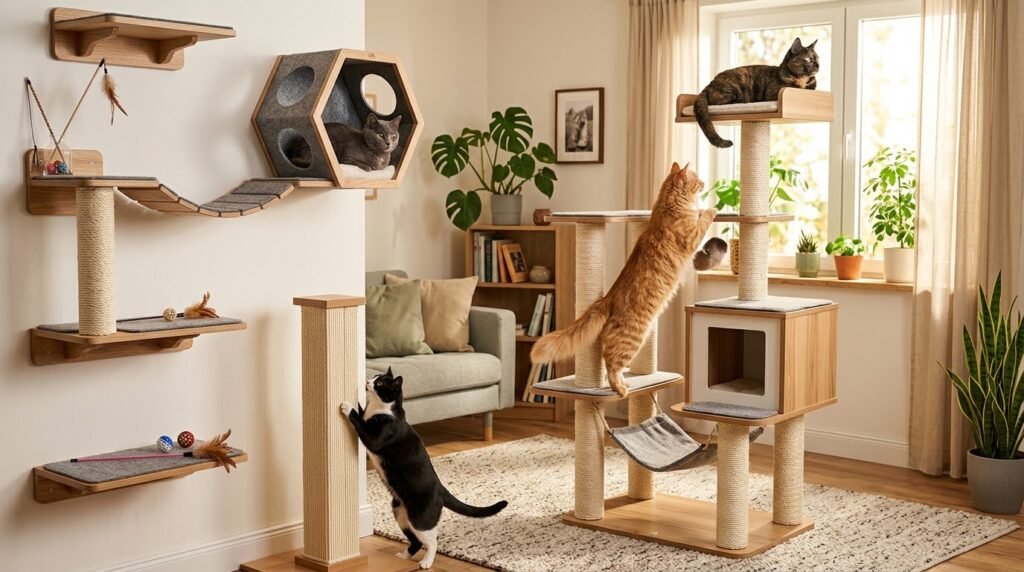
Why Indoor Cat Furniture Matters for a Cat Who’s Never Set Paw Outside
An outdoor cat sorts most of her own needs out. She climbs, she scratches bark to mark territory and keep her claws in shape, she finds a hidden spot to nap where nothing can sneak up on her, and she watches the world from somewhere high. Bring that same cat indoors permanently, and none of those needs disappear — she just has to find substitutes.
That’s exactly where most “problem behaviour” comes from. Scratched banisters, cats stress-pacing at 11pm, or a cat who won’t settle anywhere except your lap aren’t personality quirks so much as an indoor environment that isn’t giving her what a garden used to. The right pieces of indoor cat furniture — something to climb, something to scratch, somewhere to hide, somewhere elevated to watch from — cover those gaps without you having to do anything beyond placing them well.
The Core Pieces Every Indoor Cat Furniture Setup Needs
You don’t need to fill a room to get this right. Most homes do fine with one solid piece from each of these categories:
Climbing and scratching. This is the one owners skip most often, and the one that causes the most furniture damage when they do. A compact cat climbing tower or vertical cat scratcher gives your cat height and a legitimate place to dig her claws in, which is usually enough on its own to stop her going for the sofa.
A den or resting spot. Cats sleep upwards of sixteen hours a day, and a lot of that rest happens better somewhere enclosed and slightly hidden, not out in the open middle of a room.
A window perch or elevated lookout. Even cats who never go outside are usually glued to a windowsill given the chance. A proper perch turns that habit into comfortable, safe entertainment instead of a precarious balancing act on a narrow ledge.
Something interactive. Static furniture covers rest and territory. A toy with genuine movement covers the mental stimulation a bored cat is often missing, which is where a lot of 3am zoomies come from.
None of this needs to happen at once, and it definitely doesn’t need to look like a cat superstore exploded in your living room. One well-chosen piece per category goes a long way.
Our Indoor Cat Furniture Picks at Mew Vora
For the climbing and scratching piece, our Cat Climbing Cylinder and Scratcher is built as a compact cylinder rather than a sprawling multi-level tree, so it earns its place in a small flat instead of eating the whole corner of a room. It’s priced from £22.99 to £29.99 depending on size and colour.
For the den and resting piece, our Smart Cat Cave Bed gives a cat somewhere enclosed to retreat to, which pairs naturally with a climbing piece — most cats want to climb, look around, and then go tuck themselves away, not stay up on a perch all day.
For the interactive piece, our Homefish Smart Cat Toy with Motion Sensor adds unpredictable movement near the rest of the setup, which does more for a bored cat than a toy that just sits there waiting to be picked up.
And if you’ve got more than one pet in the house, our Donut Dog Bed, Fluffy Plush Round Cat Bed gives each animal their own ground-level spot too, so the climbing tower doesn’t end up being the only bit of peace in the house.
You can see the full range under cat products if you want to build the setup out piece by piece.
How to Choose Indoor Cat Furniture for a Small UK Flat
Space is the real constraint for most of us, not budget or choice. A few things worth checking before you buy anything:
- Footprint before height. A tall, dramatic cat tower looks great in a showroom photo, but if it doesn’t actually fit your corner, it becomes a very expensive coat rack. Measure the spot first.
- A stable base. Any wobble at all, and most cats simply won’t use the piece again. This matters more than almost any other feature.
- Real scratching material. Sisal rope holds up far better than carpet offcuts, which shred within weeks and don’t satisfy the scratching instinct properly.
- Multi-purpose over single-purpose. A piece that combines climbing, scratching, and a resting spot does more for a small flat than three separate items that each do one thing.
- Easy to clean. Between shedding, the odd hairball, and general wear, furniture that can be wiped down or vacuumed easily will last a lot longer than it looks like it will in the first week.
If wall space is more available than floor space, wall mounted cat shelves are also worth a look — they let you build height gradually along one wall without committing to a single large freestanding piece.
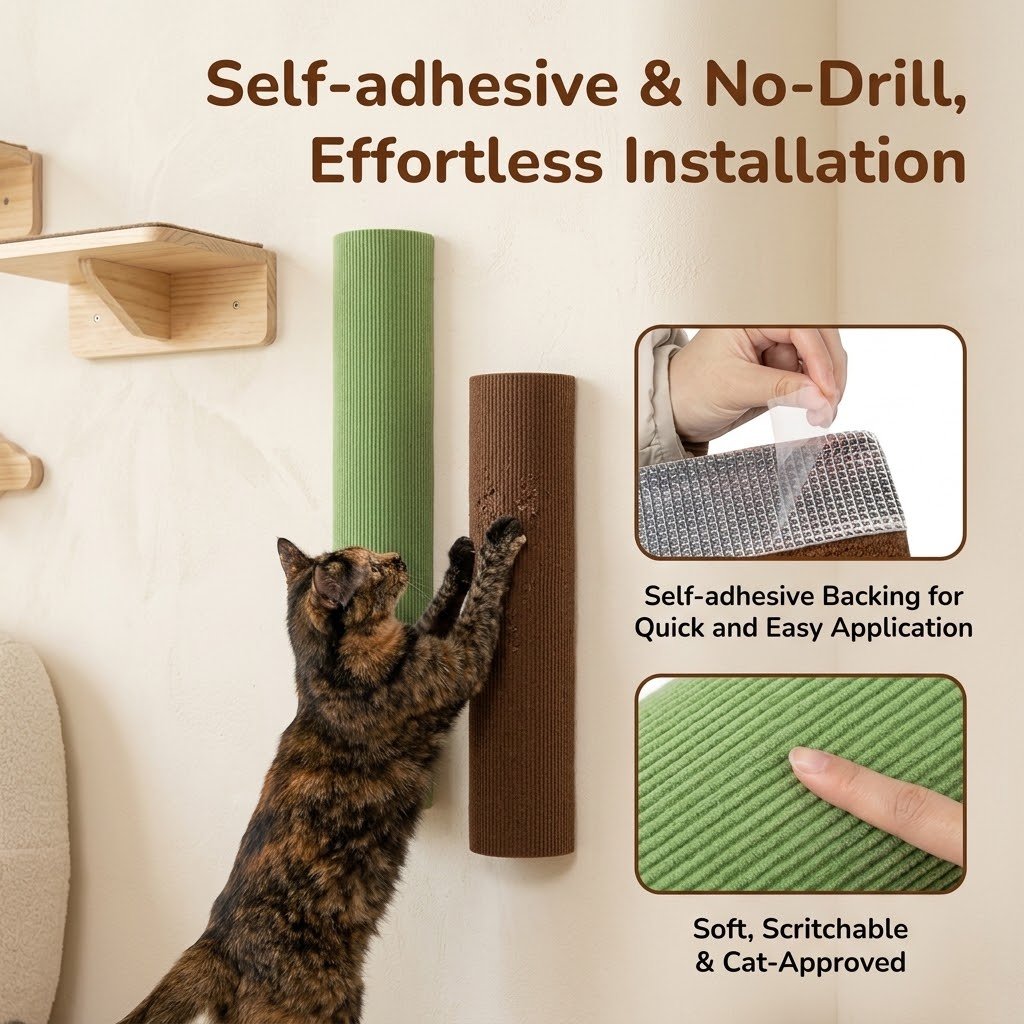
Where to Put It
Placement decides whether a piece of indoor cat furniture gets used daily or gets ignored within a fortnight:
- Put climbing and scratching furniture somewhere your cat already spends time, not tucked away in a spare room she rarely visits.
- Keep a window perch near natural light and a view of the street or garden — this is usually the single most-used spot in the whole house.
- Give resting spots a bit of distance from the busiest walkway, so they feel like a retreat rather than somewhere she’ll get stepped over.
- Avoid doorways and high-traffic corners for anything freestanding, since a knock or a fright is often all it takes for a cat to write a piece off entirely.
FAQ: Indoor Cat Furniture
Do indoor cats really need dedicated furniture, or are toys enough? Toys cover play, but they don’t cover climbing, scratching, or territory the way furniture does. Cats without proper furniture usually redirect those needs onto your actual furniture instead.
How much indoor cat furniture does one cat need? One solid piece per category — climbing/scratching, resting, and an elevated lookout — is enough for most single-cat homes. Multi-cat households usually benefit from a second resting spot or perch to reduce competition.
What’s the difference between indoor cat furniture and a regular cat tree? “Cat tree” and “cat tower” usually refer to a specific tall, multi-platform structure. Indoor cat furniture is the broader category, and includes climbing pieces, beds, caves, window perches, and interactive toys — a full cat tree is only one option within it.
Is it worth spending more on indoor cat furniture, or will a cheap option do? Stability and scratching-surface quality matter far more than price alone. A cheap piece with a wobbly base or thin carpet covering often gets abandoned within weeks, which ends up costing more once you replace it.
The Bottom Line
Indoor cat furniture isn’t about redecorating around your cat — it’s about giving her the outlets that a purely indoor life doesn’t provide on its own. Start with one solid climbing and scratching piece, like our Cat Climbing Cylinder and Scratcher, and build outward from there based on what she actually uses. If you want a deeper look at picking the right climbing piece specifically, our cat climbing tower guide covers that in more detail.
Browse the full range of cat products at Mew Vora, or get in touch via our contact page if you’re not sure what your space and your cat actually need.