

If that sounds familiar, you don’t have a “hairy cat problem.” You have a grooming tool problem. The right deshedding tool for cats uk can pull out the loose undercoat hair before it ever hits your floor, and once UK cat owners try one properly, they rarely go back to a basic supermarket brush.
You’ve just vacuumed. You’ve wiped down the sofa. You’ve even run a lint roller over your jumper before leaving the house. Twenty minutes later, there it is again — a fine layer of cat hair drifting across the kitchen floor like it has a mind of its own.
Here’s everything you need to know before you buy one — including which type actually suits your cat, not just the one with the best packaging.
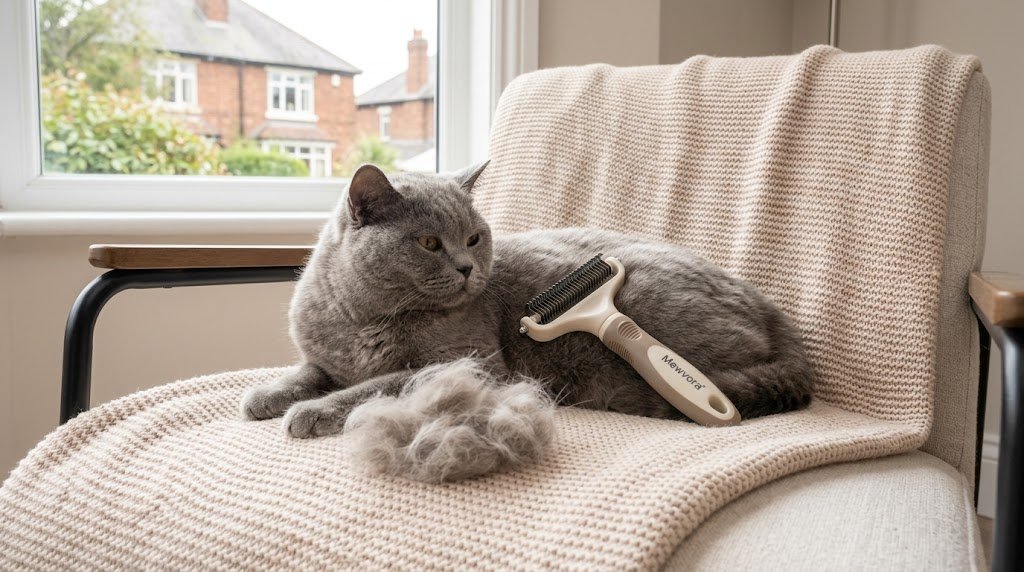
What Is a Deshedding Tool, Exactly?
Not every brush that touches your cat’s coat is a deshedding tool. A regular bristle brush mostly just moves surface hair around. A proper deshedding tool is built to reach through the topcoat and lift loose, dead hair out of the soft undercoat underneath — the hair that would otherwise end up on your sofa, your black trousers, or, unfortunately, occasionally in your dinner.pin
Most cats grow two layers of fur: a coarser topcoat for protection, and a dense, insulating undercoat. That undercoat sheds constantly, and it’s this layer a true deshedding tool is designed to work on, rather than just skimming the top like a standard brush does.
Why UK Cat Owners Need One More Than Most
Central heating is the quiet culprit here. In milder, un-heated homes, a cat’s shedding naturally slows down once the weather cools. But in a typical UK house with the heating on for most of the year, your cat’s body doesn’t always get that signal — so shedding carries on at a fairly steady rate through autumn and winter too, not just in spring.
It doesn’t help that some of the UK’s most popular cat breeds are also its heaviest shedders. The British Shorthair — the nation’s favourite pedigree cat — carries a famously dense double coat. Ragdolls, Maine Coons and Persians all shed heavily as well. Add in the fact that far more UK cats are kept strictly indoors (smaller gardens, busier roads) than in countries where outdoor access is the norm, and you’ve got cats shedding year-round rather than in two short seasonal bursts.
That’s the honest answer to “why does my house always have cat hair in it?” It’s not that your cat is unusual. It’s that UK homes and UK cats are a near-perfect setup for constant shedding — which is exactly why the right tool makes such a noticeable difference.
The 3 Best Types of Deshedding Tool for Cats uk
Not every cat will tolerate the same tool, so it’s worth knowing your options rather than grabbing the first one you see.
1. Stainless Steel Deshedding & Dematting Brush — the all-rounder
This is the tool to reach for if your main goal is cutting down the amount of fur floating around your home. A dual-sided design gives you the best of both worlds: a 9-tooth side to work through stubborn tangles and mats, and a finer 17-tooth side to lift out loose undercoat hair.
Mew Vora’s Stainless Steel Pet Hair Removal Brush is built exactly this way — sharp stainless steel blades that glide through the coat without scratching the skin, an ergonomic non-slip handle, and it’s rated to reduce shedding by up to 95% with regular use. It comes in small and large sizes and two colours, so it works equally well for a slim domestic shorthair or a big, dense-coated Maine Coon.
Best for: most cats, especially heavy shedders, double coats, and long-haired breeds.
SHOP CALLOUT: Stainless Steel Pet Hair Removal Brush — £24.99–£29.99 →
2. Deshedding Gloves — for cats who “hate” being brushed
Some cats bolt the second they see a brush, no matter how gentle it is. For those cats, a grooming glove is often the answer, because it doesn’t look or feel like a grooming tool at all — it feels like being stroked.
The 2 Pcs Pet Grooming Gloves use 255 soft silicone tips across a pair of gloves (one for each hand), so you simply pet your cat as normal while the tips collect loose hair. It doubles as a gentle massage, which makes it a good starting point for kittens, nervous cats, or older cats with more sensitive skin.
Best for: cats who dislike brushes, kittens, nervous or senior cats.
SHOP CALLOUT: 2 Pcs Pet Grooming Gloves — £19.99 →
3. Electric Grooming Brush with Steam — the spa treatment
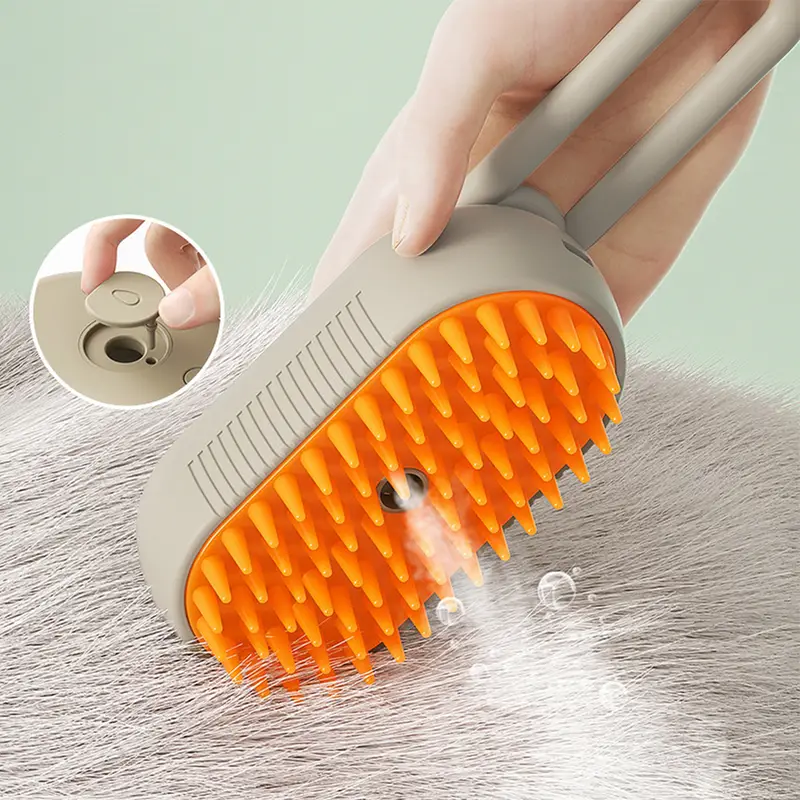
If your cat genuinely enjoys grooming sessions and you want to take it up a notch, an electric option adds a steam function that helps loosen dust, dirt and dead hair before it’s brushed away — plus a gentle massage action many cats seem to love.
The Electric Pet Grooming Brush is USB rechargeable, available in white or coffee, and has already picked up a five-star review from a Mew Vora customer who said it “helps reduce shedding, softens the coat, and makes grooming more comfortable.”
Best for: owners who want the most thorough at-home routine, and cats that are already relaxed about grooming.
SHOP CALLOUT: Electric Pet Grooming Brush — £29.99 →
Quick Comparison
| Tool | Best For | Price | Why It Works |
|---|---|---|---|
| Stainless Steel Deshedding Brush | Most cats, heavy shedders, double coats | £24.99–£29.99 | Dual-sided dematting + deshedding, up to 95% less loose hair |
| Grooming Gloves (2 Pack) | Cats who hate brushes, kittens, nervous cats | £19.99 | Feels like stroking, not grooming |
| Electric Grooming Brush | Owners wanting a full spa-style session | £29.99 | Steam loosens dirt and dead hair, gentle massage action |
How to Use a Deshedding Tool Safely
A deshedding tool only works well if your cat actually tolerates the process, so it’s worth doing this properly rather than rushing in.
- Let them investigate first. Put the tool down and let your cat sniff it before you use it. A tool that suddenly appears near their face is far more likely to spook them.
- Start short. Aim for 60–90 seconds on the first few sessions rather than a full groom. Stop while your cat is still relaxed, not once they’ve had enough.
- Always brush in the direction of hair growth. Going against it pulls on the skin and undercoat, which is uncomfortable and can put your cat off grooming altogether.
- Deal with mats before deshedding. If you find a tangle, use the wider-toothed dematting side (or a dematting comb) to work it loose gently before switching to the fine deshedding side. Never yank a brush through a mat.
- Watch their body language. Flattened ears, a swishing or thumping tail, or skin twitching are all signs to stop. End the session on a good note and try again later.
- Reward, every time. A small treat after each session teaches your cat that the tool means something good is coming.
A UK Cat Shedding Calendar
- Spring (March–May): the heaviest shed of the year, as cats drop their thicker winter undercoat.
- Autumn (September–October): a second, usually lighter shed as the winter coat grows back in.
- Indoor cats, year-round: because centrally heated homes stay at a fairly constant temperature, indoor cats often shed steadily all year rather than in two clear bursts — which is why a quick 2–3 times a week routine tends to work better for them than seasonal deep-cleans alone.
Common Mistakes to Avoid
- Using the wrong tool for the coat. A tool built for a short-haired cat won’t do much for a Maine Coon’s dense undercoat, and vice versa.
- Skipping the trouble spots. Behind the ears, the belly, and the back legs mat first on most cats — don’t just brush the back and call it done.
- Brushing over an existing mat. This pulls on the skin underneath and is one of the main reasons cats learn to dread grooming. Loosen it first.
- Only grooming when you notice fur everywhere. By that point your cat is already shedding heavily. A short, regular routine prevents the build-up in the first place.
FAQs
How often should I use a deshedding tool on my cat? Two to three times a week is right for most cats. During the spring shed, or if you have a long-haired breed, daily short sessions of a minute or two work even better.
Do deshedding tools hurt cats? Not when used correctly. A good stainless steel deshedding brush is designed to glide through the coat and lift loose hair without pulling at the skin — the key is brushing gently and in the direction of hair growth, and never forcing it through a mat.
What’s the difference between deshedding and dematting? Dematting removes existing tangles and knots, usually with a wider-toothed side or comb. Deshedding removes loose, dead undercoat hair before it has the chance to mat or fall out. Many tools, including Mew Vora’s stainless steel brush, combine both in one.
Can kittens use a deshedding tool? Kittens can be introduced to gentle grooming, but a soft grooming glove is usually a better starting point than a metal-toothed brush, simply because it’s less intimidating and easier to build a positive association with.
Will deshedding stop my cat getting hairballs? It helps significantly. Every loose hair removed with a brush or glove is one less hair your cat swallows while self-grooming, which can meaningfully cut down on hairballs over time.
The Bottom Line
You don’t need a drawer full of grooming gadgets. For most UK cats, one well-chosen deshedding tool — used for a couple of minutes, a few times a week — is enough to keep shedding under control and your home noticeably hair-free. Start with the stainless steel deshedding brush if your cat tolerates brushing, or the grooming gloves if they’re more the sensitive type.
Ready to sort your cat’s shedding for good? Explore the full grooming range at Mewvora.com — free UK delivery on every order.