

A proper waterproof dog bed uk sorts that out before it turns into a daily clean-up job. Not a bed that’s vaguely “water-resistant” on the listing but soaks through the first time the water bowl gets knocked over mid-zoomies. An actual one. Here’s what that means, what to look for, and where a lot of listings are quietly stretching the truth.
Anyone who’s lived through a British winter with a dog knows the routine. Back door opens, dog charges into the garden, ninety seconds later they’re back in with mud up both front legs and a coat that’s somehow wetter than the actual rain outside. Ten minutes after that, they’re curled up on their bed. So is the mud.
“Waterproof” Doesn’t Always Mean What the Listing Says
Search “waterproof dog bed UK” and you’ll find three different products using the word to mean three different things, which is exactly why so many people end up disappointed with what turns up.pin
Waterproof means a sealed barrier, usually a PVC or polyurethane-backed liner, that stops liquid getting anywhere near the stuffing. Spill a full water bowl on it and the inside stays bone dry.
Water-resistant slows liquid down rather than stopping it. Fine for a quick splash you wipe up straight away. Not fine for a dog who lies down still dripping from a walk.
Washable is a different category entirely. The cover comes off and goes in the machine, but the bed itself isn’t sealed against moisture while your dog’s actually lying on it.
None of these is the wrong choice. They just suit different dogs and different households, and it’s worth knowing them apart before you buy rather than after.
-
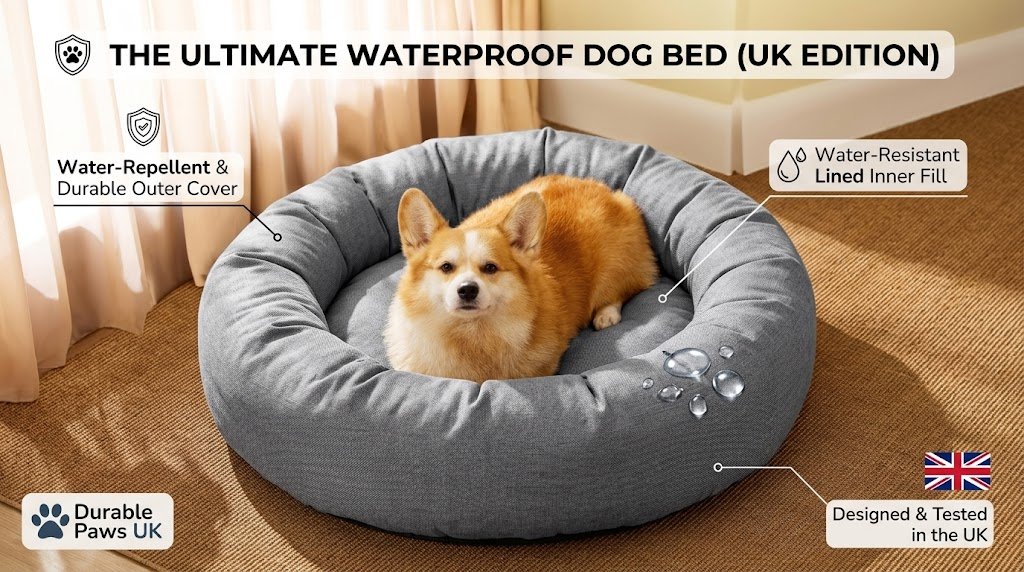
Donut Dog Bed, Fluffy Plush Round Cat Bed
Price range: £26.99 through £44.99

Do You Actually Need a Fully Waterproof bed One?
Probably not every dog owner does, and that’s worth saying upfront. A genuinely sealed, waterproof base earns its keep for:
- Dogs who are properly muddy most days — spaniels, Labradors, anything that treats a puddle as a personal swimming pool
- Puppies still being house-trained
- Senior or unwell dogs with continence issues
- Beds that live outdoors, in a conservatory, a utility room, or the boot of the car
- Multi-pet households where the water bowl regularly gets sent flying
- Anywhere genuinely damp — plenty of UK homes have at least one room like this
If your dog’s usually dry and the bed just needs the odd refresh, a washable cover will probably do everything you need without paying extra for waterproofing you’ll rarely use.
What to Actually Look For
A few things separate a bed that’s genuinely waterproof from one that just says so on the box:
- Outer fabric — Oxford fabric or ripstop nylon, tightly woven so it sheds water instead of soaking it up
- A sealed inner liner — PVC or polyurethane-backed, sewn in beneath the cover. This is the part actually doing the work
- Taped or welded seams — stitching alone lets water through the needle holes, even on otherwise waterproof fabric
- A removable, washable outer cover over that liner — the best setup, since it protects the waterproof layer underneath and still goes in the machine itself
- A non-slip base — matters more than people expect on tile or laminate, where a wet dog can send a flat bed skidding across the kitchen
- Sized for stretching out, not curling up — measure your dog lying flat, not curled in a ball, and size up from there
Getting the Size Right
Bed sizing isn’t standardised across brands, so go by measurement rather than the breed name on the label. Measure nose to tail, fully stretched out, then add 15–20cm.
| Bed diameter | Roughly suits |
|---|---|
| 40cm | Small breeds, kittens |
| 50–60cm | Medium dogs, larger cats |
| 70–80cm | Larger dogs (Labradors, Collies) |
| 100cm | Giant breeds (Newfoundlands, Great Danes) |

Where This Gets Practical
Worth being straightforward here rather than overselling it: most of the beds in our dog range are built around comfort and easy cleaning rather than a fully sealed waterproof base. Our Donut Dog Bed, for example, has a non-slip bottom and a cover that’s hand or machine washable on a gentle cycle, which handles the day-to-day reality of drool, brushed-off mud and shed fur without much fuss.
For a dog who soaks a bed properly most days, the better move is pairing a washable bed like that with a separate waterproof liner or vet bed underneath. You get a sealed layer doing the hard work, comfort on top, and you can pull the liner out and hose it down the second it needs it instead of replacing the whole bed.
Keeping It Fresh in a Damp Climate
Brush off dried mud before it goes anywhere near the washing machine — wet mud straight into the drum just smears it through the fabric instead of lifting out. Wash on a gentle, lowish-heat cycle, and skip the tumble dryer where you can, since high heat is what flattens the stuffing over time. Dry it somewhere with airflow rather than shoved against a radiator, which tends to stiffen the fabric, and give the floor underneath a quick check too. Damp can sit in carpet under a bed even once the bed itself feels dry.
A Few Quick Questions
Are waterproof dog beds worth it in the UK?
For muddy walkers, puppies, older dogs, or anything living outside or in the car, yes. For a dog who’s usually dry, a washable cover does the job for less money.
Can you put a waterproof dog bed in the washing machine?
Depends how it’s built. A removable cover over a separate liner washes fine on its own. A bed that’s one solid waterproof piece is generally better off spot-cleaned or hosed down, since repeated machine washing can break down the waterproof coating over time.
What’s the actual difference between waterproof and water-resistant?
Waterproof stops liquid completely. Water-resistant slows it down enough to survive a quick spill if you mop it up straight away, but it won’t cope with a dog lying down properly wet.
Do waterproof beds make dogs too hot?
Sealed fabric traps more heat than breathable cotton, which matters for dogs prone to overheating. Look for a breathable top layer with the waterproof part underneath, rather than a dog lying directly on plasticky fabric.
Why does a bed smell musty even after washing?
Usually it’s how it dried, not how it washed. Air-drying somewhere with no airflow is the main cause — move it near an open window rather than into a corner, and it should clear.
A £15 bed you replace every couple of months usually costs more over a year than one decent washable bed that just gets cleaned and reused. Have a browse of our full range — free UK shipping either way, so that’s one less thing to weigh up.